Dallas Fire Station Capped With Cool Roof
The extreme heat of a Texas summer makes the
operation of air conditioning systems a necessity for most - the National
Weather Service reports that summer daytime temperatures in Dallas “frequently
exceed 100 degrees.” Unfortunately, with this necessity comes increased energy
usage and higher utility bills.
The extreme heat of a Texas summer makes the operation of air conditioning systems a necessity for most - the National Weather Service reports that summer daytime temperatures in Dallas “frequently exceed 100 degrees.” Unfortunately, with this necessity comes increased energy usage and higher utility bills.
 In
recent years, the city of Dallas has passed a Green Building program for its
city-owned buildings as part of its Green Dallas initiative
(www.greendallas.net). One feature that helps to combat the intense Texas
summer heat and lowers utility expenses is cool roofing. Cool roofs have
external coatings, usually colored white, which reflect the sun’s rays and
reduce the roof’s surface temperature. In turn, this reduces demand for air
conditioning, leading to lower utility bills, lower peak electricity demand and
electricity production costs, and increased building occupant comfort. These
roofs are growing in popularity, especially with the influence of the U.S.
Green Building Council’s Leadership in Energy and Environmental Design (LEED)
green building certification program. Architects can earn a credit (SS Credit
7.2: Heat Island Effect: Roof) toward LEED certification by designing a
building with a reflectant roof.
In
recent years, the city of Dallas has passed a Green Building program for its
city-owned buildings as part of its Green Dallas initiative
(www.greendallas.net). One feature that helps to combat the intense Texas
summer heat and lowers utility expenses is cool roofing. Cool roofs have
external coatings, usually colored white, which reflect the sun’s rays and
reduce the roof’s surface temperature. In turn, this reduces demand for air
conditioning, leading to lower utility bills, lower peak electricity demand and
electricity production costs, and increased building occupant comfort. These
roofs are growing in popularity, especially with the influence of the U.S.
Green Building Council’s Leadership in Energy and Environmental Design (LEED)
green building certification program. Architects can earn a credit (SS Credit
7.2: Heat Island Effect: Roof) toward LEED certification by designing a
building with a reflectant roof.
When the city of Dallas hired Brown Reynolds Watford (BRW) Architects Inc. of Dallas to design a new structure for the city’s Fire Station No. 33, cool roofing was an important component of the design. Seeking LEED Silver certification for the project, the architects specified a CertainTeed two-ply modified bitumen roof system (CertainTeed GTA-C-B2) with a Flintlastic GTA CoolStar Cap Sheet - a mineral-surfaced APP modified bitumen membrane with reflectant CoolStar acrylic coating.
 “We
have been specifying thermoplastic roofs on a lot of projects, but the city of Dallas wanted a built-up
roof on Fire Station No. 33,” said Chris Sano, Project Architect for BRW
Architects. “The CertainTeed system with the CoolStar coating was one of the
products we found that could achieve the same level of reflectance. We’re
familiar with CertainTeed and know they make a quality product, so we were
comfortable with choosing this system.”
“We
have been specifying thermoplastic roofs on a lot of projects, but the city of Dallas wanted a built-up
roof on Fire Station No. 33,” said Chris Sano, Project Architect for BRW
Architects. “The CertainTeed system with the CoolStar coating was one of the
products we found that could achieve the same level of reflectance. We’re
familiar with CertainTeed and know they make a quality product, so we were
comfortable with choosing this system.”
The city hired Dallas contractor West Roofing Inc. to install the 140-square roof this past April. To ensure a clean, smooth installation, West Roofing waited until all other subcontractors had finished their work on the roof before starting to minimize the possibility of damages or blemishes from post-installation foot traffic.
“The biggest challenge of this project was making sure nobody marked up the roof,” said Andy Halusek, Vice President of West Roofing. “We wanted the pristine, white look of the roof to remain after we finished. So, the less traffic you have on the roof, the better.”
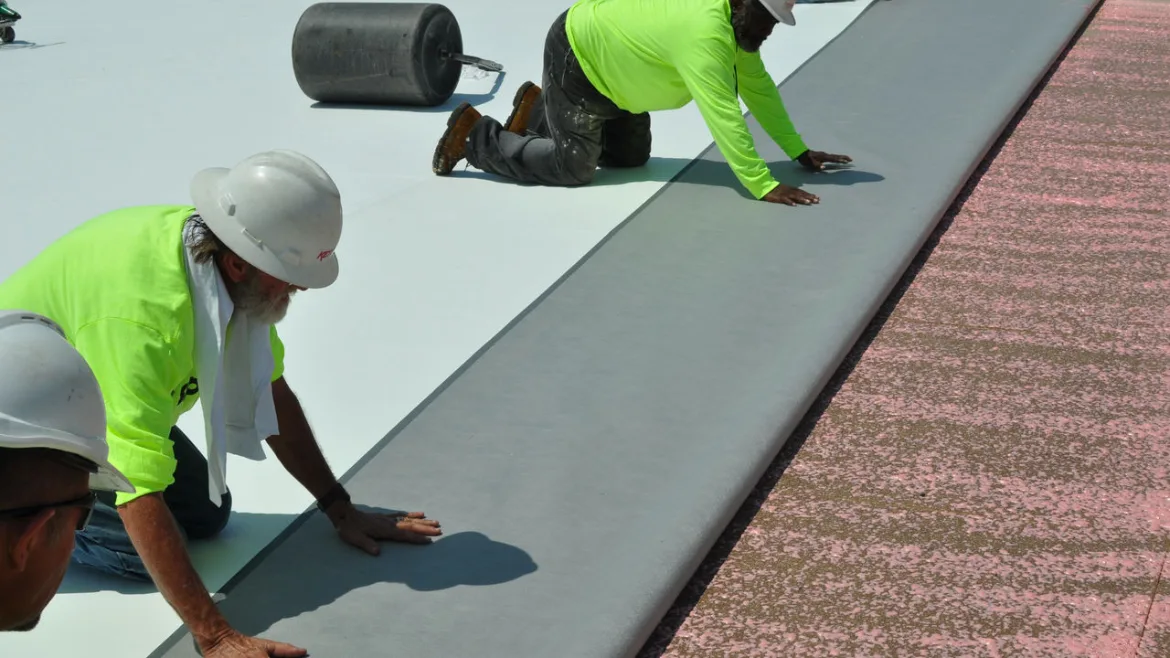
Working with a crew of nine, West Roofing began by mechanically fastening a 3-inch thick polyisocyanurate board to the roof deck and then hot-mopping a 3/4-inch thick layer of expanded perlite board on top of the Iso with Type IV asphalt. The crew then hot-mopped the CertainTeed Flexiglas FR Base Sheet to the perlite board. Rounding out the installation, the Flintlastic GTA CoolStar Cap Sheet was torch-applied on top of the base sheet.
 The
CoolStar reflectant coating is uniquely offered as a factory-applied option for
CertainTeed cap sheets, saving the step of applying the reflectant coating
after the roof is installed. The only coating application needed is to cover
any asphalt that extends outside the laps of cap sheets. The crew was easily
able to roll CoolStar Touchup White Elastomeric Acrylic Roof Coating over the
laps to cover up asphalt overflow.
The
CoolStar reflectant coating is uniquely offered as a factory-applied option for
CertainTeed cap sheets, saving the step of applying the reflectant coating
after the roof is installed. The only coating application needed is to cover
any asphalt that extends outside the laps of cap sheets. The crew was easily
able to roll CoolStar Touchup White Elastomeric Acrylic Roof Coating over the
laps to cover up asphalt overflow.
“We were pleased with how the factory-applied coating saved us time,” Halusek said. “Time is money.”
The crew next installed roof flashings, and the job was complete after seven days of work.
The job ran without a hitch and produced a reflectant roof, with a clean, smooth appearance. The crew found the system very easy to work with.
“I’ve had no problem with CertainTeed’s products,” Halusek said. “They make the best torch-grade modified membranes in the industry, and I’ve been using their products for years. We were able to get in there, turn the job around and leave. This was a good, clear-cut job.”
The
new fire station’s 140-square roof was installed by West Roofing Inc. of Dallas. To ensure a
clean, smooth installation, West Roofing waited until all other subcontractors
had finished their work on the roof before starting the installation.The roof
system consisted of mechanically fastened 3-inch thick polyisocyanurate board,
with a 3/4-inch thick layer of expanded perlite board hot mopped on top of it
with Type IV asphalt. The crew then hot-mopped the CertainTeed Flexiglas FR
Base Sheet to the perlite board, and the Flintlastic GTA CoolStar Cap Sheet was
torch-applied on top of the base sheet
The extreme heat of a Texas summer makes the operation of air conditioning systems a necessity for most - the National Weather Service reports that summer daytime temperatures in Dallas “frequently exceed 100 degrees.” Unfortunately, with this necessity comes increased energy usage and higher utility bills.
When the city of Dallas hired Brown Reynolds Watford (BRW) Architects Inc. of Dallas to design a new structure for the city’s Fire Station No. 33, cool roofing was an important component of the design. Seeking LEED Silver certification for the project, the architects specified a CertainTeed two-ply modified bitumen roof system (CertainTeed GTA-C-B2) with a Flintlastic GTA CoolStar Cap Sheet - a mineral-surfaced APP modified bitumen membrane with reflectant CoolStar acrylic coating.
The city hired Dallas contractor West Roofing Inc. to install the 140-square roof this past April. To ensure a clean, smooth installation, West Roofing waited until all other subcontractors had finished their work on the roof before starting to minimize the possibility of damages or blemishes from post-installation foot traffic.
“The biggest challenge of this project was making sure nobody marked up the roof,” said Andy Halusek, Vice President of West Roofing. “We wanted the pristine, white look of the roof to remain after we finished. So, the less traffic you have on the roof, the better.”
Working with a crew of nine, West Roofing began by mechanically fastening a 3-inch thick polyisocyanurate board to the roof deck and then hot-mopping a 3/4-inch thick layer of expanded perlite board on top of the Iso with Type IV asphalt. The crew then hot-mopped the CertainTeed Flexiglas FR Base Sheet to the perlite board. Rounding out the installation, the Flintlastic GTA CoolStar Cap Sheet was torch-applied on top of the base sheet.
When
the city of Dallas decided to design a new structure for the city’s Fire
Station No. 33, cool roofing was an important component of the design. Here the
building is shown under construction.
“We were pleased with how the factory-applied coating saved us time,” Halusek said. “Time is money.”
The crew next installed roof flashings, and the job was complete after seven days of work.
The job ran without a hitch and produced a reflectant roof, with a clean, smooth appearance. The crew found the system very easy to work with.
“I’ve had no problem with CertainTeed’s products,” Halusek said. “They make the best torch-grade modified membranes in the industry, and I’ve been using their products for years. We were able to get in there, turn the job around and leave. This was a good, clear-cut job.”
Looking for a reprint of this article?
From high-res PDFs to custom plaques, order your copy today!