Technical Perspective: Polyisocyanurate Foam Insulation
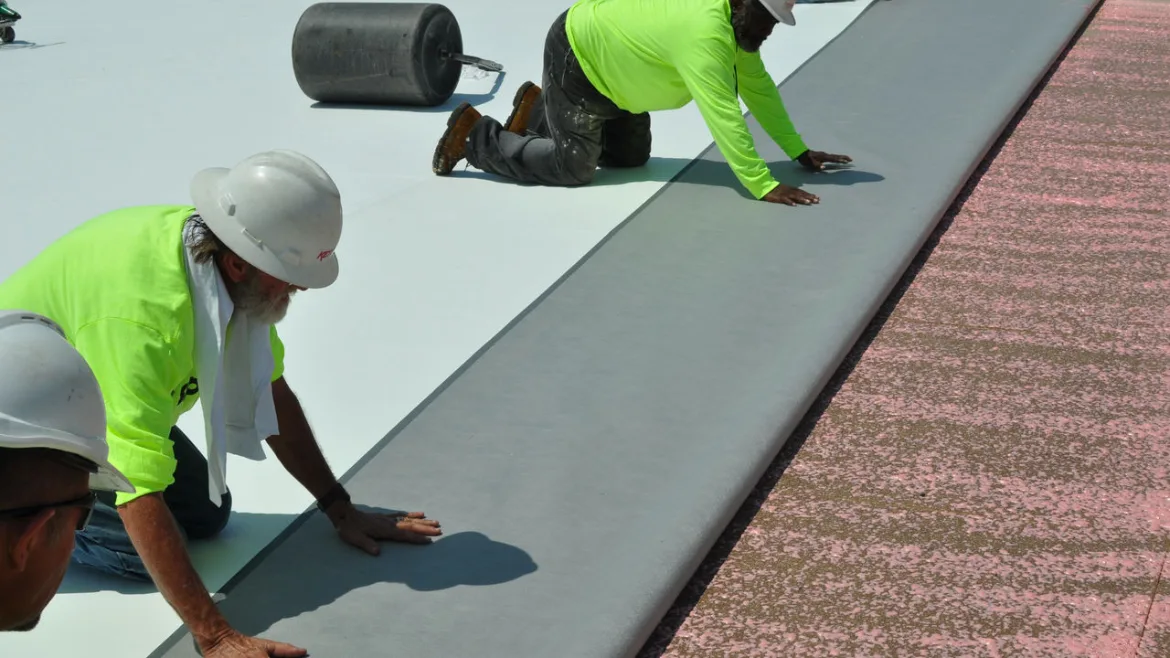
Polyisocyanurate foam insulation (polyiso) is clearly the best product to use with today’s roofing systems to provide efficient and cost-effective insulating properties. Polyiso roof insulation represents more than 55 percent of all insulation used in low-sloped roof construction. It has a 20-year history and is widely accepted because of its excellent R-value, superior fire performance and compatibility with all types of roofing systems. It is a cost-effective insulation and is approved for direct installation to steel roof decks without the need for a thermal barrier.
Is the thermal performance of polyiso greater than polystyrene?
The average thickness of insulation in roof applications is approximately 2 inches. Polyiso insulation has more R-value per inch of thickness than expanded- or extruded-polystyrene insulation. Two-inch thick polyiso offers 40 percent better thermal performance than polystyrene of the same thickness. Because it is thinner for the same R-value, the roofing contractor usually can obtain a number of economies including wood blocking thickness at perimeters and penetrations while obtaining the correct flashing height. This system also provides increased flexibility when designing tapered systems to drain water more efficiently from the roof.
How does polyiso perform verses polystyrene in a fire test ?
Polyiso is the only foam plastic insulation to have both FM and UL approval for direct-to-steel deck. FM Approval for Class 1 Roof Systems was granted to polyiso for passing FM 4450. UL classification was earned by passing ANSI/UL 1256. Polyiso insulation can withstand high temperatures and passes both FM 4450 and ANSI/UL 1256.
Polystyrene is a thermoplastic material that softens at 165 degrees F and melts between 200 degrees F to 210 degrees F, making it incapable of reaching the standard 30-minute fire exposure. The high temperatures reached in FM 4450 melt the polystyrene, which can then run through the joints in the steel deck, increasing the risk for fire to spread on the underside. Therefore, FM does not list any Class 1 Roof System Approvals for the use of polystyrene insulation in a direct-to-steel deck application.
What are the basic differences between thermoset and thermoplastic insulations?
Foamed plastic insulation is manufactured from either thermoplastic or thermoset materials. Expanded and extruded polystyrenes are thermoplastic foams that soften at approximately 165 degrees F and melt at approximately 200 to 210 degrees F. Because this temperature range is reached with all hot asphalt systems it is almost impossible to apply polystyrene insulations in hot asphaltic systems without damaging the insulation. Certain solvents used in cold-asphaltic mastics and single-ply adhesives will attack and dissolve the thermoplastic foams. Products such as petroleum based solvents — commonly used in adhesives, coatings, paints, and stains — must be allowed to evaporate before coming into contact with thermoplastic foams. Although thermoplastic foams can be used in this type of roof system, a cover board is required, adding to the overall system cost.
Polyiso insulation products are thermosets, which are manufactured as a rigid foam board. They will not soften or melt at temperatures used with the hot asphalt systems. Also, thermoset foams hold up well to adhesives.
How do the roof energy costs compare?
Energy Conservation Management firm in Baltimore has conducted a number of studies comparing the cost effectiveness of polyiso insulation and other products when used in roof construction. In a recent study, polyiso was far more cost effective than either extruded or expanded polystyrene insulation. The ECM study disclosed information about return on investment, installation costs and payback. Successful roofing contractors will want to make their customers aware of this potential for increased energy savings.
What is thermal drift and how does it occur?
“Thermal Drift” is a reduction of the R-value of all insulating foams, at different rates depending on the type of product. This occurs when air diffuses into the foam’s cellar structure. Air is less thermally efficient than the blowing agents used in manufacture, and its molecular structure is also smaller, allowing air to defuse into the cells of the foam. The resultant mixture is less thermally efficient, causing a reduction in the R-value of the foam. As this is a surface phenomena of the foam board, as soon as the board is installed in the roofing system, the drift is slowed, particularly when encapsulated in bituminous membranes. At the present time, there are methods under consideration around the world that will simplify representation of the R-values of foam insulation using a “long-term” basis, thus removing the confusion related to thermal drift.
What are the changes to the blowing agents?
Due to global concerns over the continued depletion of the ozone layer, the U.S. Environmental Protection Agency has stated that as of January 1, 2003, the manufacture of certain chemicals used as blowing agents will no longer be permitted. This has forced the manufacturers of polyiso foam to seek other, environmentally acceptable, non-ozone-depleting replacements to be used as blowing agents. Currently, the commonly used blowing agent HCFC-141b will no longer be acceptable. After the phase-out date, polyiso foam products will be non-ozone-depleting “green” products while at the same time offering superior insulation performance.
Although the next-generation blowing agents have a long history of success in Europe, experience in North American roofing systems is limited. This will put even more pressure on the architect/specifier to select a roof system supplied by a single source so that the manufacturer can offer a guarantee that will cover the polyiso foam insulation as part of a system guarantee.
Also, the EPA has announced a proposed rule that would eliminate the use of ozone depleting compounds as blowing agents used in the extruded polystyrene industry as of January 1, 2005. While this is not a final rule, it should be noted that after the polyiso industry switches to non-ozone-depleting compounds, most extruded polystyrene products will still contain ozone- depleting raw materials.
What are the benefits of pre-cut polyiso crickets?
The two main advantages of pre-cut polyiso crickets are that they create less waste and are easier to apply. Because there is not as much waste, the roofing contractor does not need to take as much material to the job site or onto the roof. Perhaps the biggest advantage is the ease of application of the pre-cut products. Since there is no cutting on the job, there is less human error in fabricating the tapered system on the job. This enables pre-cut materials to be installed faster and with less error than if the system had to be field-fabricated.
Initially, pre-cut crickets may appear to be somewhat more expensive, however, the roofing contractor quickly learns that pre-cut crickets save in roof top scrap, cost of removal, dump fees and labor. With the increasing difficulty to find skilled workers, any advantage that the roofing contractor can use might make the difference between profit and loss.
Where can I find out more information on polyisocyanurate foam insulation?
The Polyisocyanurate Insulation Manufacturers Association (PIMA) addresses the frequently asked questions about polyiso insulation. PIMA publishes technical bulletins that can help explain these issues in a straight and forthright manner. Always consult the individual manufacturer regarding its respective products. PIMA can be reached at 202.628.6558 or on the Web at www.pima.org.
Looking for a reprint of this article?
From high-res PDFs to custom plaques, order your copy today!