Self-Adhered Membranes Will Stick Around
Environmental regulations and insurance requirements are playing an increasing role in the types of materials and the methods of application that we will employ in the roofing industry in the near future.
 Environmental regulations and insurance requirements are playing an increasing role in the types of materials and the methods of application that we will employ in the roofing industry in the near future. An example of this is in the introduction of self-adhered membrane systems using either modified bitumen or thermoplastic membranes. These types of systems have been introduced in part to counter safety concerns associated with hot bitumen and torch applications and environmental issues surrounding solvent-based cold adhesive applications. Several membrane manufacturers now provide these systems. This technology is still relatively new to the United States commercial roofing market, and this article will attempt to detail the technology behind these systems for contractors.
Another advantage to contractors is their ease of application. No special equipment is required, and they are less labor-intensive than many other roof system applications. Application is completed in a quick three-step process. The membrane is rolled out over the properly prepared substrate. Once the membrane has been rolled out and adequately relaxed, the membrane sheets are installed by removing a separator sheet from the roll as the membrane is adhered to the substrate. Subsequent rolls are applied in similar fashion, utilizing manufacturer-required overlaps at end laps and seams.
Hot bitumen is used on SBS sheets due to the polymer blend of the membrane, which has a high molecular weight and a softening point in excess of 270°F. The accelerated temperature of the bitumen heats the sheet and releases the modified SBS asphalt that is engineered into the sheet. Due to the fact that typical SBS blends exhibit high cohesive strength with a low adhesive force, the hot bitumen serves as the catalyst and the engineered SBS serves as the adhesion. A thin layer of applied SBS is all that is required to properly adhere the sheet. This is similar to the process of torch fusing SBS or APP sheets; the intent is to provide flow of the engineered modified bitumen over the substrate.
Because typical SBS blends have low adhesion (or tack) at ambient temperatures, they are not properly suited for self-adhered sheets, which must adhere at temperatures as low as 50°F. In the past, this prohibited the use of self-adhered sheets. In recent years, the technology has advanced to the point where self-adhered sheets are now plausible. A self-adhered polymer - such as styrene isoprene styrene (SIS) - along with other agents and resins are blended into the SBS engineered sheet. This formulation permits the lowering of the blend's viscosity, making it soft enough to achieve good adhesive properties, high long-term peel strength and the proper tackiness to perform at temperatures as low as 50°F. This advance in technology has permitted two layers of modified sheets to be successfully self-adhered without torch fusing, as was required by early incarnations of the sheets.
When they are properly applied, self-adhered sheets do not require the cure time typically associated with cold adhesive applications. These membranes can be applied directly to approved substrates and achieve immediate initial peel strengths to provide watertight laps at ambient temperatures. Most manufacturers require the self-adhered membranes be applied when ambient temperatures are above 50°F. Peel strength at the laps is usually achieved in a few days from heating methods such as air, sunlight or any other external source.
The primary advantages to these types of applications are that they are solvent free and there are no volatile organic compounds contained in them. Environmental issues concerning the use of solvents in certain parts of the country, particularly with the use of single-ply bonding adhesives, have forced single-ply manufacturers to investigate the use of alternate attachment methods for fully adhered applications. The other advantage to this attachment method is that it provides for more uniform application rates, eliminating insufficient adhesion and less chance of adhesive related wind uplift problems.
This application method is also less labor intensive and quicker to install because there is no wait time associated with adhesive curing. One manufacturer states that these types of applications are up to 50 times faster than taped seam applications, up to five times faster than water-based adhesives, and up to three times faster than solvent-based adhesives. Another advantage is that this method of attachment eliminates the chance of airborne particles contaminating the membrane application.
Cleanliness of the substrate is also of critical importance. Dust, dirt or any other foreign matter that has collected on the substrate must be removed prior to application. Dirt particles - even those minute in size - can have an adverse effect on the self-adhered membrane sheets. The particles impede full adhesion and can similarly lead to chronic adhesive and cohesive failures at these points. Proper preparation procedures are required for the success of the membrane. These constraints may limit the membranes application during periods of high winds, particularly on remedial roof projects where dirt and debris from tear-offs is present.
 As previously noted, there are also temperature restrictions with these membranes. The material should be applied when the ambient temperature is above 50°F. This obviously restricts application in many parts of the country throughout the year. Temperature restrictions are applied because the membrane does not perform in cold temperatures. The self-stick blend becomes increasingly stiff and significantly reduces the points of contact. The result is the membrane does not readily adhere to the substrate and subsequent attempts to roll and re-roll the membrane into place only traps air between the membrane and the substrate.
For the best results, the contractor should apply the membrane in temperature conditions approved by the manufacturer and closely follow the manufacturer's application requirements.
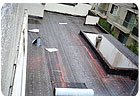
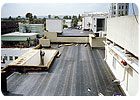
Many self-adhered base sheets can be temporarily left exposed, serving
as a waterproof roof for projects that must be completed in stages.
(Photo courtesy of Mule-Hide.)
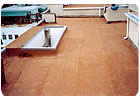
Self-adhered modified bitumen cap sheets are available in a variety of colors and are designed
to adhere to a variety of substrates. (Photo courtesy of Mule-Hide.)
Application Advantages
Self-adhered membranes offer several initial advantages for contractors. First and foremost, they appear to address the current safety and environmental issues. The application of these sheets is completed with no heat and no fumes, which makes them relatively safe to apply. They are also environmentally friendly because there are no volatile organic compounds in the material.Another advantage to contractors is their ease of application. No special equipment is required, and they are less labor-intensive than many other roof system applications. Application is completed in a quick three-step process. The membrane is rolled out over the properly prepared substrate. Once the membrane has been rolled out and adequately relaxed, the membrane sheets are installed by removing a separator sheet from the roll as the membrane is adhered to the substrate. Subsequent rolls are applied in similar fashion, utilizing manufacturer-required overlaps at end laps and seams.
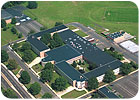
Commercial applications using self-adhered membranes alleviate concerns associated with hot
bitumen and torch applications. (Photo courtesy of CertainTeed.)
Self Adhered Modified Bitumen
Modified bitumen sheets have been used in the United States for nearly 25 years. In this time, the technology has evolved to the point where there are now application procedures other than torch or hot applied. This is primarily due to the fact that the waterproofing for modified bitumen systems is accomplished by the reinforcement in the sheet, not the bitumen. This differs from the bitumen's primary purpose in built-up roof systems, which is to act as a waterproofing agent; in modified bitumen sheets, it primarily serves as an adhesive agent.Hot bitumen is used on SBS sheets due to the polymer blend of the membrane, which has a high molecular weight and a softening point in excess of 270°F. The accelerated temperature of the bitumen heats the sheet and releases the modified SBS asphalt that is engineered into the sheet. Due to the fact that typical SBS blends exhibit high cohesive strength with a low adhesive force, the hot bitumen serves as the catalyst and the engineered SBS serves as the adhesion. A thin layer of applied SBS is all that is required to properly adhere the sheet. This is similar to the process of torch fusing SBS or APP sheets; the intent is to provide flow of the engineered modified bitumen over the substrate.
Because typical SBS blends have low adhesion (or tack) at ambient temperatures, they are not properly suited for self-adhered sheets, which must adhere at temperatures as low as 50°F. In the past, this prohibited the use of self-adhered sheets. In recent years, the technology has advanced to the point where self-adhered sheets are now plausible. A self-adhered polymer - such as styrene isoprene styrene (SIS) - along with other agents and resins are blended into the SBS engineered sheet. This formulation permits the lowering of the blend's viscosity, making it soft enough to achieve good adhesive properties, high long-term peel strength and the proper tackiness to perform at temperatures as low as 50°F. This advance in technology has permitted two layers of modified sheets to be successfully self-adhered without torch fusing, as was required by early incarnations of the sheets.
When they are properly applied, self-adhered sheets do not require the cure time typically associated with cold adhesive applications. These membranes can be applied directly to approved substrates and achieve immediate initial peel strengths to provide watertight laps at ambient temperatures. Most manufacturers require the self-adhered membranes be applied when ambient temperatures are above 50°F. Peel strength at the laps is usually achieved in a few days from heating methods such as air, sunlight or any other external source.
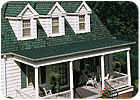
CertainTeed's Flintlastic SA can be color-coordinated to match steep-slope roofing options in
residential applications. (Photo courtesy of CertainTeed.)
Self-Adhering TPOs
Recently, some thermoplastic manufacturers have begun producing self-adhered TPO membranes. Factory applied (specially formulated) adhesive is set on the bottom side of the membrane during the manufacturing process and covered with a release film. The application concept is similar to self-adhered modified sheets. The substrate is cleaned and prepared for installation; the membrane is then unrolled and positioned for proper placement. The release film is removed from the roll as the membrane is adhered to the substrate and all edges, seams and the field of the roof are rolled for additional adhesion.The primary advantages to these types of applications are that they are solvent free and there are no volatile organic compounds contained in them. Environmental issues concerning the use of solvents in certain parts of the country, particularly with the use of single-ply bonding adhesives, have forced single-ply manufacturers to investigate the use of alternate attachment methods for fully adhered applications. The other advantage to this attachment method is that it provides for more uniform application rates, eliminating insufficient adhesion and less chance of adhesive related wind uplift problems.
This application method is also less labor intensive and quicker to install because there is no wait time associated with adhesive curing. One manufacturer states that these types of applications are up to 50 times faster than taped seam applications, up to five times faster than water-based adhesives, and up to three times faster than solvent-based adhesives. Another advantage is that this method of attachment eliminates the chance of airborne particles contaminating the membrane application.
Proper preparation of the substrate before application is essential to ensure the performance of
self-adhered membranes. (Photo courtesy of Mule-Hide.)
Application Requirements
Proper application methods are critical to the long-term performance capabilities of self-adhered membranes. The success of the membrane is based in large part on the preparation of the substrate. The substrate must be clean, free of all debris and contaminants, and free of any moisture. If the membrane is applied over a wet surface or any points where moisture exists, the membrane will not fully bond. Spots of disbondment can transfer throughout adjacent areas and large-scale delamination can occur. Moisture, including dew, should be evaporated by torch or other drying mechanisms prior to application. Do not apply these sheets when precipitation is present.Cleanliness of the substrate is also of critical importance. Dust, dirt or any other foreign matter that has collected on the substrate must be removed prior to application. Dirt particles - even those minute in size - can have an adverse effect on the self-adhered membrane sheets. The particles impede full adhesion and can similarly lead to chronic adhesive and cohesive failures at these points. Proper preparation procedures are required for the success of the membrane. These constraints may limit the membranes application during periods of high winds, particularly on remedial roof projects where dirt and debris from tear-offs is present.
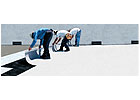
Self-adhered membranes should always be applied following the manufacturer's requirements.
(Photo courtesy of Johns Manville.)
For the best results, the contractor should apply the membrane in temperature conditions approved by the manufacturer and closely follow the manufacturer's application requirements.
Looking for a reprint of this article?
From high-res PDFs to custom plaques, order your copy today!

.webp?height=740&t=1781278983&width=auto "KEE(2).png")