Roofing Safety
Roof Safety Spotlight: Safe or Die Gear
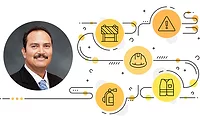
David Federly combined his knack for roof safety and artistic creativity to develop one of the boldest brands in roofing

David Federly has worn many hats over more than two decades in roofing and construction, but he latched onto something when it came to safety on the rooftop for a commercial/industrial installer. He launched Safe or Die as an internal safety-culture initiative and his entrepreneurial spirit took over.
The bold, in-your-face messaging and unique artwork grew into its own brand that also serves as a powerful reminder of the hazards roofers face every day. Roofing contractors can see his work on jobsites around the country and on display at places like the International Roofing Expo.
RC chatted with Federly about his roofing journey and prioritizing safety:
RC: Tell us about your company and how does safety play into your day-to-day?
DF: Safety is 100% of what we do at Safe or Die Gear. Even if we’re working on a fashion/lifestyle line, safety is engrained in the DNA of our products. Our slogans, our designs, the functionality or the style — it always ties back to safety. We think safety should be a priority no matter what the day’s activities involve.
RC: What drew you to the roofing industry, and how did you find your niche in safety?
DF: Honestly, I kind of fell into my niche (safety pun intended). When I first got into roofing at Sprayfoam Southwest (now Global Roofing Group), I wore a lot of hats — compliance, marketing, trade shows, business development, and a ton of admin work, including co-writing our successful OSHA VPP Star application, which we were awarded in 2023.
With a background in IT and graphic design, there was a natural intersection for me between safety, marketing, and design. Safe or Die started as an internal safety culture initiative, and it organically grew (with a lot of effort) into its own brand.
RC: It’s easy to talk about safety and much harder to implement. Do you have a philosophy or approach that’s easily teachable to roofing contractors?
DF: Super easy! Be safe or die! How do you get people to do something they know they SHOULD do, but might take more effort or more time, or it just slipped their mind? Safety shouldn’t be subtle and safety hazards are literally everywhere, all the time.
Part of the reason I think the brand is so successful is because the message is clear and right in front of you on the jobsite. If the guy working in front of you is wearing a Safe or Die performance vest that literally screams “Roof Safe or Die.” It’s a powerful reminder.
RC: You’ve been at this a long time. Why is roofing still such a deadly occupation and does it ever get frustrating for you?
DF: I think the truly frustrating part is the number of preventable incidents. The proverb “accidents will happen” applies to roofing the same as it applies to any other industry or activity, but the consequences are far worse. Roofers are exposed to a lot more potential hazards than average due to the nature of roofing. Heights, extreme weather, and the physical demands, coupled with a number of other potential elements like sharp tools, open flames, chemicals and slippery conditions create an exponentially more dangerous environment. All with fewer possible administrative controls.
RC: Do you have any proudest moments in safety?
DF: The ADOSH VPP Star accreditation — no question. Shout out to Andrew Taunton at Global Roofing Group! It took us five years, but we did it. It was a massive accomplishment for the whole team, but Andrew and I spearheaded the effort. From countless hours revising our application, to creating new programs to build and reinforce a safety culture, to endless phone calls with our (very patient) ADOSH liaisons — it was a labor of love. I’m proud to say we were the first roofing contractor in the U.S. to be awarded a VPP Star Site designation.
RC: Tell us about your unique logo design and how has your artistic creativity elevated your safety brand?
DF: Honestly, I don’t think it just elevated the brand — I think it created it. There’s something about a skull that really resonates in the construction world — especially roofing. I’d love to take all the credit for where the brand has gone, but really, I just followed the cues of the industry. Bold. Gritty. Edgy. Tough — like a roofer. And with visceral messaging to match.
RC: Do you have a cautionary safety-related experience to share?
DF: Yes — a very personal close call that I’ll keep to myself. But I will say this: your reputation precedes you. Whether you’re a roofing employee, a brand owner, a parent, or a friend, how you approach safety in one role is how you should approach it in all roles. Once you have a close call, it will change the way you think. And statistically, it’s a matter of when, not if. I’m thankful mine was only a close call — and I hope to use the Safe or Die brand to make sure others have the same outcome.
RC: What can every roofer do today (easily) to help their crews stay safe?
DF: Be your brother’s (or sister’s) keeper. Watch out for each other, and learn to recognize potential hazards before they become close calls.
RC: What’s the biggest misconception roofers still have about safety?
DF: That it’s “all or nothing.” A lot of people think if they’re not the safety guy or the competent person on site, it’s not their responsibility. But safety is everyone’s responsibility — in a hundred little moments throughout the day. It's closing the chemical bottle. Putting your tools away. Throwing trash in a bin. Drinking water. Wearing the right PPE. There’s no easy button to push and suddenly make a site safe. So even if safety isn’t your job title, safety is your job.
RC: What encourages you about the future of roof safety?
DF: I wish I could see the future — so I could get in early on it! But I think tech will play a huge role, and I’m excited about where it’s headed. Some specific areas I’d love to see more advancement in:
- Lighter-weight fabrics and textiles for better-performing clothing and gear
- Stronger, lighter alloys for more comfortable and effective fall protection and PPE
- Smaller, portable batteries and sensors to track vitals and predict health concerns
- High-quality plastics and composites possibly replacing metal components.
The overall safety culture in roofing is trending in the right direction. It’s no longer just a top-down mandate — more and more workers are choosing to think and act safely. That gives me hope.
Looking for a reprint of this article?
From high-res PDFs to custom plaques, order your copy today!