Legislation Analysis
Bill Calls for Restricting Quotas, Adding Safety Requirements for Warehouses
Similar legislation is pending in state governments
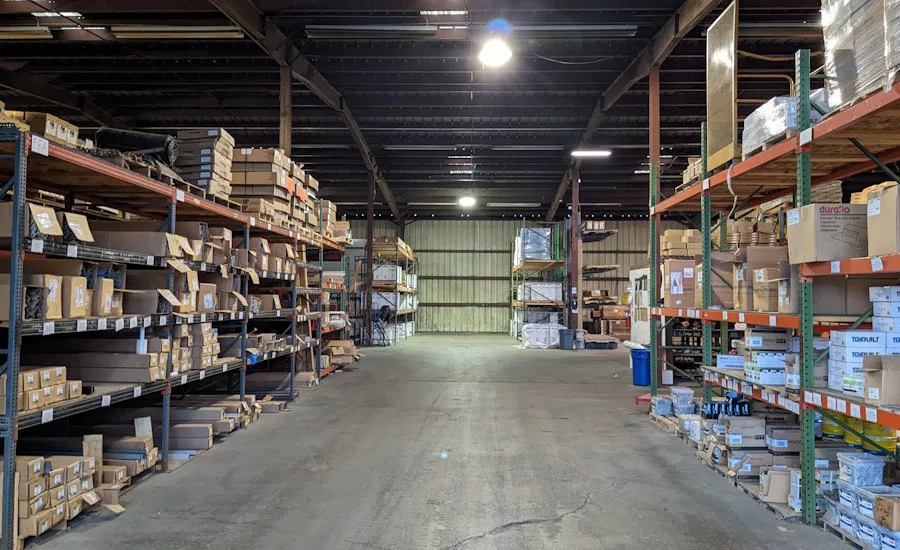
Though a federal effort to restrict production quotas for warehouse workers and require extra safety measures has yet to see the light of day, roofing distributors will want to pay attention to similar legislation popping up in various states
Introduced May 2, 2024, Senate Bill 4260, titled “Warehouse Worker Protection Act,” appears designed to address larger retailers like Amazon, but it does include wholesale distributors using NAICS codes to denote which companies are affected. This includes most roofing material suppliers.
“The Warehouse Worker Protection Act is about dignity, safety, and respect for the workers that make companies run,” said Sen. Jack Markey (D-Mass.), the bill’s sponsor. “When corporations repeatedly use and abuse warehouse workers, they show us that their number one obligation is to their profits.
“This bill would guarantee that we have basic standards in place to protect warehouse workers from the worst of corporate greed and move us one step further towards true worker justice.”
The bill would require employers to provide, within 180 days of an employee’s start date, written notice of: production expectations; discipline that could result from failing to meet those expectations; how productivity is confirmed — such as workplace surveillance — and whether incentives are offered for meeting or exceeding expectations.
The bill limits the level of productivity employers can require and prohibits employers from taking disciplinary actions if expectations are above what is allowed under the bill.
Among the list of restrictions, prohibited quotas include:
- Those that prevent compliance with required meal or rest periods
- Those preventing compliance with health and safety laws
- Preventing the use of bathroom facilities
- Non-compliance with employee rights to “reasonable accommodations”
- A target or performance set over a time that is shorter than one day
The bill states employees would be entitled to 15-minute paid breaks after every four hours of work. Employers would be required to post notices of this requirement in the workplace.
Discipline Limitations
When taking disciplinary action, the bill directs employers to provide employees with a “written explanation … regarding the manner in which the covered employee failed to perform,” including the production level and why the employee didn’t meet it.
Should employees be discharged due to not meeting productivity requirements, notice must be provided, except in the case of egregious misconduct. The bill doesn’t specify the contents of the notice or how much notice should be provided.
Employers would need to maintain records related to how they determined productivity levels and retain them for three years. Employees would have access to these records, as would designated employee representatives.
Violations of the bill result in civil penalties of $10,000 and $25,000 for 29 U.S.C. 206 and 207. Violations of 29 U.S.C. would be subject to $76,987 per violation, while repeat or willful violations could be up to $769,987.
New Oversight
To administer these directives, the bill would create a Fairness and Transparency Advisory Board within the Department of Labor’s Wage and Hour Division. The bill would also create a “Quota Task Force” involving labor and work advocacy organizations. The body would assist in the enforcement of the bill and train employees with respect to the rights the bill grants them.
Within a year of the act passing, OSHA would be required to publish a standard that calls for employers to designate a readily available person adequately trained to render first aid and provide all employees access to an occupational medical consultation service.
Three years after the passing of the bill, OSHA would publish a proposed standard for ergonomic program management to prevent risk factors associated with musculoskeletal disorders. This could include requirements for training and hazard control, including workstation redesign and workplace reductions.
Will it Pass?
The chances of this bill becoming law are low. For starters, it has yet to be introduced into the 119th Congress. The bill was referred to the Committee on Health, Education, Labor and Pensions on May 2, 2024, where it currently languishes.
“The bill is still sitting in the Senate HELP Committee, no markup, and no GOP support,” said Trent Cotney, partner at Adams & Reese.
The Trump administration’s penchant for deregulation also makes the bill unlikely to move forward anytime soon, let alone land on President Donald Trump’s desk for a signature in its current form.
Some states already have a version of the Warehouse Worker Protection Act, including California, Minnesota, New York, Oregon and Washington. Others, like Arizona, Illinois, Massachusetts and Rhode Island have pending legislation.
Looking for a reprint of this article?
From high-res PDFs to custom plaques, order your copy today!