Project Profile
An Examination of Concrete Roofing Tile’s Wind Resistance Capabilities
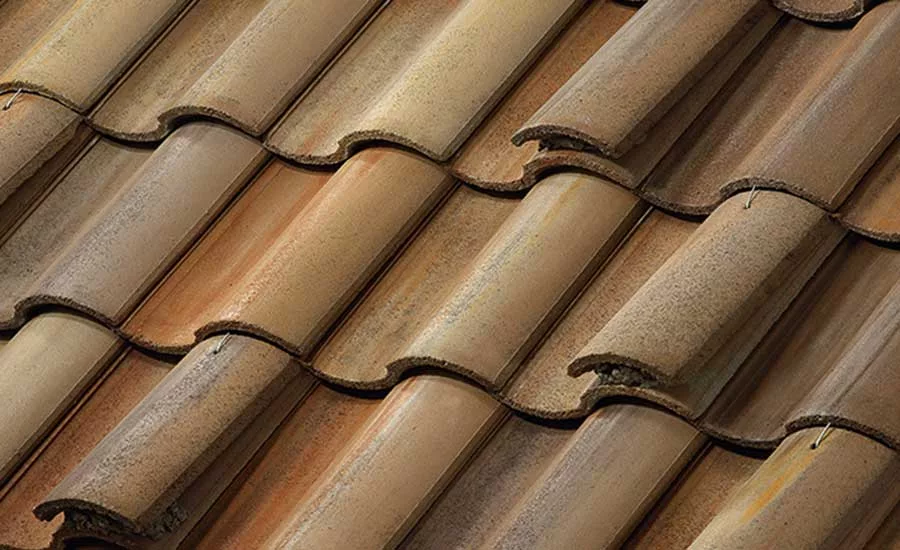
Photo credit: Westlake Royal Roofing Solutions
Many regions within the U.S. experience wind conditions that are powerful enough to damage homes, and given the roof’s location on the structure, it can be very susceptible to loss; thus, the contractor’s role in guiding homeowners in choosing appropriate roof materials in wind-prone regions is essential. For homeowners in wind-prone areas, roofing materials that can withstand severe wind events are indispensable. Concrete roofing tile is an excellent option to defend against the powerful forces of wind and reduce the chances of weather-related property damage.
It is worth noting just how complex wind can be. Not only is it directly affected by temperature and barometric pressure differences in the atmosphere, but variations also influence it in terrain and topography.
Despite these variables, wind acts in relatively predictable ways once it impacts the surface of the home. For example, when the wind hits the side of the structure, it travels upwards and over the roof edge, resulting in varying degrees of uplift pressure.
Wind Uplift Considerations
ASCE 7-22, or “Minimum Design Loads and Associated Criteria for Buildings and Other Structures1,” is an integral part of U.S. building codes. It outlines wind uplift pressure considerations, with the key points being:
- The uplift pressures that affect a roof are highest at the corners of the roof (i.e., eave/rake corner, peak of the ridge at the rake edge).
- The edges: rakes and eaves, are a close second in uplift pressures.
- As wind moves across a roof’s surface, negative pressure, or suction, is created and results in an uplift toward the centers of a roof plain.
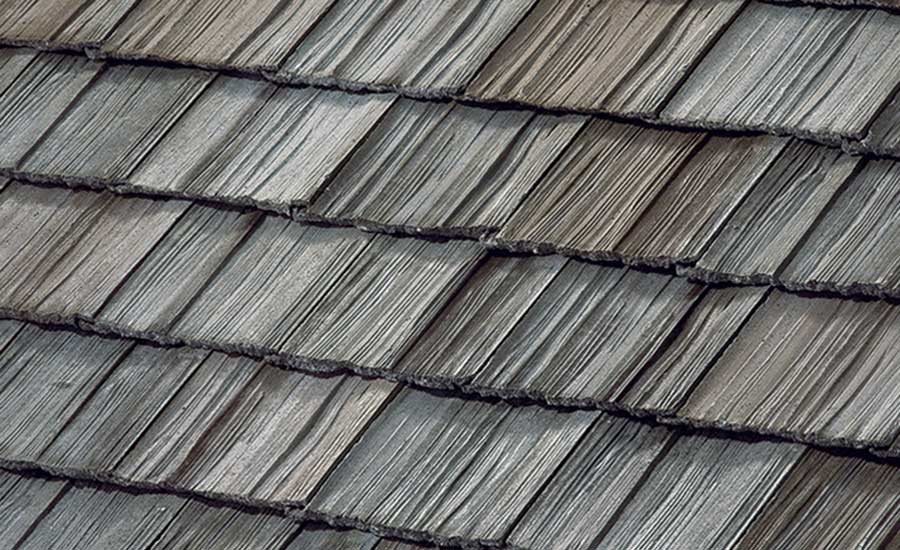
Some concrete roof tile applications have been tested to perform in sustained wind speeds up to 180 miles per hour when installed according to industry and manufacturer guidelines.
What impacts How Wind Affects the Roof
Many factors influence how the wind may affect a roof it meets. These include both speed and direction. Additional factors include:
- The Design of the Roof: Steep-pitched, gable roofs are more susceptible to wind uplift than low-pitch, hipped roofs.
- Fastening Methods: The number, style, and frequency of fasteners (i.e., nails, screws, or foam adhesives) can significantly shift the overall wind resistance of the tile’s installation.
Local Weather: High-Velocity Hurricane Zones, for example, experience a greater frequency of high winds.
- Incorrect Installation: When installing concrete roof tile, it’s, of course, important to follow the manufacturer’s published roof system installation guidance for optimum wind protection performance, as well as to ensure the warranty is valid. Incorrect installation, including misaligned tiles, improper fastening devices, or poorly installed flashing, can reduce the roof’s performance in high wind events.
Additional Industry Guidance
The Tile Roofing Industry Alliance, which for 50 years has been the industry’s voice for tile roofing code development, testing and installation best practices, provides guidance and information for both concrete and clay tile roofing options, as well as for wind resistance. TRI Alliance’s information states:
“In regions prone to tornadoes, hurricanes or extreme winds, roof tile provides one of the best defenses against wind-related property damage.
- Concrete and clay tile roofing helps in resisting hurricane-force winds.
- Natural air ventilation under the tile created by its high porosity and installation techniques helps to relieve wind stress.
- Independent testing sponsored by TRI Alliance shows that with proper attachment, clay and concrete roof tiles can sustain winds in excess of 125 miles per hour that would strip off most other roofing materials.
Clay and concrete tile roofing have been tested in accordance with Florida Building Code – Residential, Sixth Edition, to meet SECTION R 4402 High-Velocity Hurricane Zones — Roof Assemblies and Rooftop Structures, with wind speeds up to 150 miles per hour2.”
Wind Testing AND Building Codes
Concrete roof tiles are subjected to various wind testing measures in accordance with performance standards to determine the resistance that a given installation method meets for the design requirements in each region. One of the world’s most stringent wind testing requirements is for the High-Velocity Hurricane Zone of Southern Florida. Some of the wind resistance tests for concrete roof tile include:
- ASTM C1568 - 08(2020) Standard Test Method for Wind Resistance of Concrete and Clay Roof Tiles (Mechanical Uplift Resistance Method)
- ASTM C1569 - 03(2016) Standard Test Method for Wind Resistance of Concrete and Clay Roof Tiles (Wind Tunnel Method)
- ASTM C1570 - 03(2016) Standard Test Method for Wind Resistance of Concrete and Clay Roof Tiles (Air Permeability Method)
- TAS 100, 101, 102, 102A, 108, 110 and 112 are all standards of procedures for testing the performance of tile roof systems.
Additionally, the Southern Building Code Congress International (SBCCI) commissioned Redland Technology to investigate wind loads on roofing tile systems with the goal of developing a code methodology. Redland performed two experiments to develop their design method3, and these were:
Wind loads were estimated from wind tunnel tests where surface pressures on medium and high-profile roofing tiles were measured as wind was blown across a tile array
- Wind uplift resistance was estimated from constant displacement rate uplift tests that quantified the uplift resistance of roofing tiles with various attachment methods.
The resulting method was incorporated into the Standard Building Code (SBC), and later the Florida Building Code (FBC) and International Building Code.
Some concrete roof tile applications have been tested to perform in sustained wind speeds up to 180 miles per hour when installed according to industry and manufacturer guidelines.
Their true advantage in wind resistance, however, is attributed to their shape and construction, which allow wind to move freely through the system, significantly reducing stress on the roof.
Today’s concrete tile roofs provide exceptional curb appeal and, with an extensive range of colors and profiles available, can meet almost any desired architectural aesthetic. Though heavier in weight than many other roofing options, concrete roofing tile is highly durable and resilient in subtropical climates and high-wind regions. The tile is long-lasting and, with the benefits of its shape and construction, helps reduce wind uplift stresses.
While no roof will ever be 100% windproof, concrete tile roofs are able to withstand both sustained winds and more significant wind gusts, performing exceptionally well against the wind when compared to many other roofing materials.
References
- American Society of Civil Engineers, Minimum Design Loads and Associated Criteria for Buildings and Other Structures (ASCE/SEI 7-22) https://www.asce.org/asce-7/
- Tile Roofing Industry Alliance, Clay and Concrete Tile Wind Resistance, https://tileroofing.org/why-tile/durability-longevity/
- Journal of Wind Engineering and Industrial Aerodynamics, Hazelwood, 1980
Looking for a reprint of this article?
From high-res PDFs to custom plaques, order your copy today!