Making Hazard Communication a Priority
Each Year, Thousands Of Companies Fail To Meet Even The Most Basic Requirements For Keeping Workers Safe From Chemical Hazards
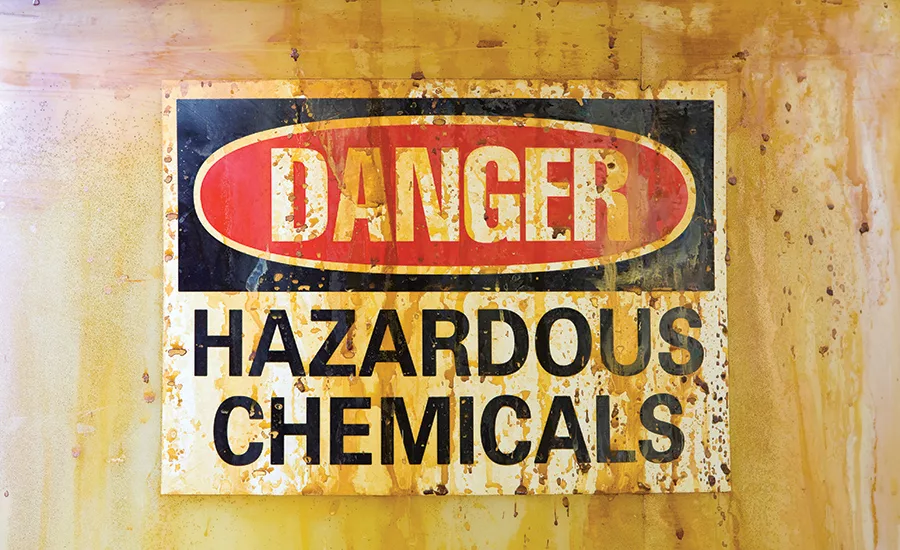
Each year, the Occupational Safety and Health Administration (OSHA) releases its list of top violations as a reminder of the risks workers face every day. While roofing contractors might typically pay more attention to fall protection — the number one violation in 2015 (6,721 citations) — it’s critical that they also address other worksite dangers, especially the second-most cited violation of 2015 — hazard communication (5,192 citations).
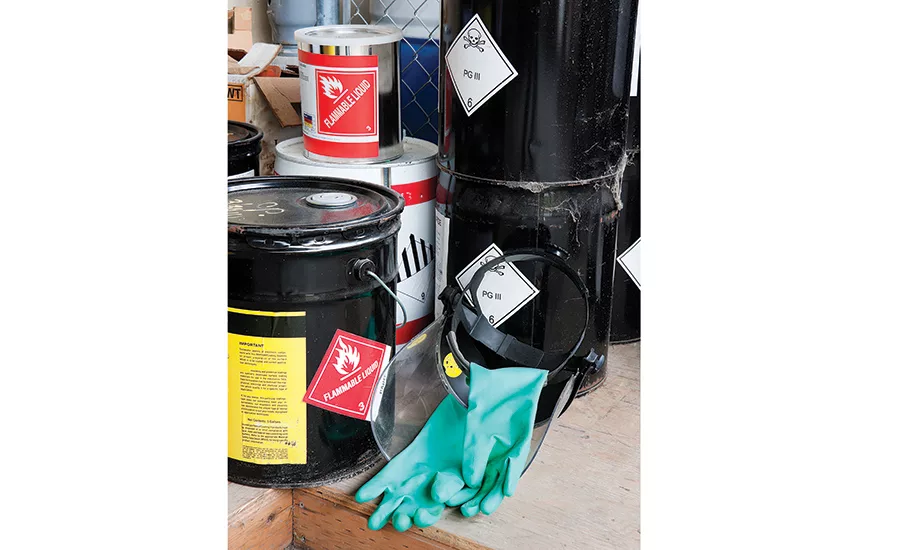
Since 2001, hazard communication (HazCom) has held a top spot on OSHA’s common violations list. Each year, thousands of companies fail to meet even the most basic requirements for keeping workers safe from chemical hazards. The most HazCom citations are issued for failure to maintain a written HazCom plan, failure to train employees, failure to properly label chemicals and failure to maintain safety data sheets (SDSs) and provide employee access to the same.
While keeping workers focused on safety is never easy, it’s critical that programs encompass a wide range of safety concerns instead of focusing on a few specific dangers.
Looming GHS Deadline
Under OSHA’s HazCom Standard, employers are responsible for communicating information about hazardous chemicals on the worksite, and any necessary precautions, to all workers. This includes sharing information with employees managed by other companies, and any outside contractors that may be working on the site. The requirement can pose significant challenges for roofing contractors who move from location to location quickly and who often have a number of workers in and out of multiple worksites. Unfortunately, not keeping up with hazardous chemical management can easily put the company, its reputation and its workers in danger.
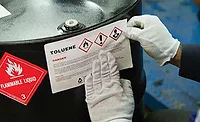
Complicating things further, OSHA revised the HazCom Standard in 2012 to align with the Globally Harmonized System of Classification and Labelling of Chemicals (GHS), a model system developed by the United Nations. The adoption of GHS triggered significant changes and a series of compliance deadlines for chemical manufacturers, distributors and users. Under the GHS, safety data sheets now follow a 16-order format and labels must include specific indicators of the chemical’s hazards.
Four years later, we’ve reached the final GHS deadline; June 1, 2016. By then, OSHA expects all companies covered by HazCom to have updated their SDS libraries and revised labels under the new GHS formats, and also trained workers on how to read and understand these changes. For companies who closely followed OSHA’s set deadlines, this requirement should be easy. However, those that did not pay as close attention to the adoption of GHS might find themselves out of compliance. Roofing contractors that fall into this latter category must take immediate steps to ensure that worksites have the most up-to-date SDSs available, workers have access to these documents and they’ve been trained on how to understand the changes. Keep in mind that it’s the safety manager’s responsibility to be on the lookout for GHS formatted SDSs, and to be saving those updated documents to the SDS library. Contact the manufacturer or distributor to secure the most current information.
New Technology Simplifies Compliance
In an industry where workers and worksites are constantly changing, communication is a key component to staying in compliance with HazCom.
Luckily, advancements in technology have improved the ways roofing professionals can safeguard employees and better facilitate hazardous chemical communication to workers across multiple worksites. The best electronic chemical management solutions available today are cloud based, mobile enabled and cover a range of chemical management activities, including chemical inventory management, custom labeling, regulatory reporting and SDS management. By eliminating some of the moving parts and manual steps that go into chemical management, these intuitive systems make it easier for all those involved to access critical safety information anytime, anywhere.
In addition to streamlining chemical communication, today’s electronic solutions also help manage the influx of new safety data sheets accelerated by the GHS adoption. A good software provider, with a robust program for acquiring SDSs, can help automate the process of updating safety data sheets by automatically supplying updated documents as they become available. Today’s cloud solutions are often easier and less expensive than paper-based systems. They also provide a better view into your hazardous chemical footprint so better decisions about compliance, workplace safety and the use of safer, less hazardous products can be made.
Training is another critical HazCom component, and something OSHA inspectors will be on the lookout for. In addition to helping better manage SDSs, a good EHS management solution can also help track and report on employee training — driving productivity and reducing operational risk from missed deadlines or outdated certifications.
Tougher Enforcement
Beyond OSHA’s alignment to the GHS, other major changes are poised to strengthen the agency’s enforcement of standards in 2016 and beyond. One measure with significant importance to roofing contractors concerns the approval for OSHA to enforce higher fines and more rigorous penalties to employers who willfully lie or mislead inspectors about matters related to employee safety. An agreement between the Department of Labor and the Department of Justice now prioritizes the prosecution of individuals involved in serious OSHA violations, including worker endangerment crimes. This means if an OSHA inspector finds evidence of company owners or managers knowingly putting workers in danger, those individuals can now face criminal charges.
OSHA is also making changes intended to bolster its enforcement by allowing inspectors to emphasize quality and thoroughness as opposed to sheer quantity. Under the new system, inspectors are required to meet a certain number of units instead of a total number of inspections. Inspection types are now worth a certain number of units, with more complicated inspections equaling more units. With this change, inspectors should feel less pressure to avoid time intensive inspections in order to meet annual goals. If an inspector shows up at your worksite you should expect that a more rigorous inspection may take place compared to years past.
Conclusions
It’s important for roofing contractors to take measures to avoid OSHA violations and ensure that no standards are forgotten. Companies should expect that OSHA will continue to take a tough stance on HazCom violations, especially with the final GHS deadline approaching and other expected chemical-related changes on the horizon. The United Nations updates GHS approximately every two years, and OSHA has stated that it will review and align with future versions as it deems necessary. That means we’re likely to see updates to the HazCom standard on a regular basis. In the meantime, roofing contractors should expect increased scrutiny on chemical safety in 2016, and continue to make HazCom compliance a priority to avoid potential penalties or fines.
Looking for a reprint of this article?
From high-res PDFs to custom plaques, order your copy today!