Cost Pressures
Construction Costs Up 11.5% as Steel Prices Surge
Contractors face extended steel delivery schedules and equipment cost pressures
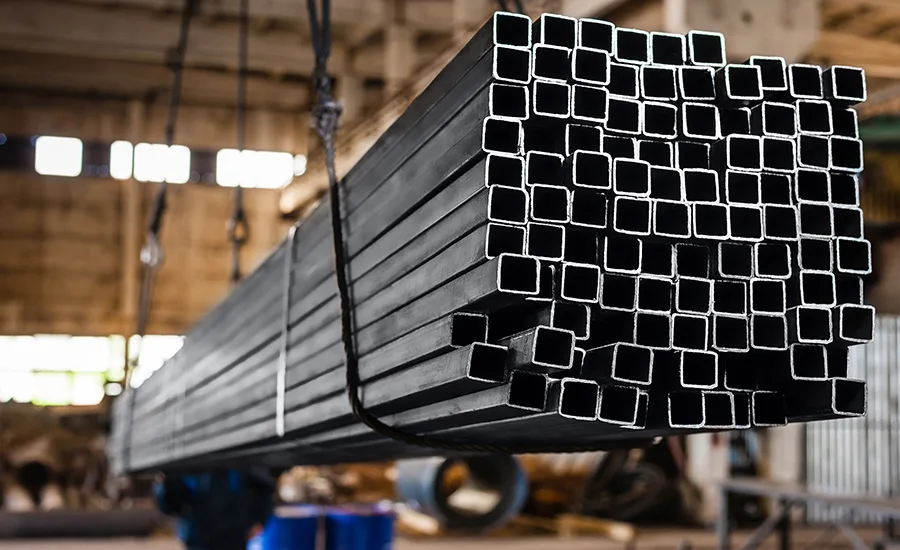
Steel mill product prices rose 32.9% over the past year as contractors faced extended delivery times for structural steel, including hollow structural sections.
Construction input prices were unchanged in October as falling petroleum and lumber costs offset increases in steel and copper, but the flat monthly reading masked continued price escalation and supply constraints affecting major building projects, according to federal data released Nov. 13.
Nonresidential construction input prices rose 0.2% for the month, while both overall and nonresidential input costs remained 11.5% higher than a year earlier, according to an Associated Builders and Contractors analysis of U.S. Bureau of Labor Statistics Producer Price Index data. The monthly readings followed September increases of 2.2% and 2.3%, respectively.
Steel mill product prices climbed 2.7% in October and 32.9% over 12 months. Iron and steel prices increased 25.1% year over year, while copper wire and cable rose 25.5%. Crude petroleum prices fell 10.3% during October, and softwood lumber declined 3.9%, offsetting some of the metals increases.
“With tariff-affected materials like iron, steel and copper still experiencing rapid price escalation, nonresidential input prices will likely continue to increase in the months ahead,” ABC Chief Economist Anirban Basu said in a statement.
A separate index tracking inputs to new nonresidential construction rose 0.7% in October and 13.3% over the past year, according to Associated General Contractors of America. Copper and brass mill shapes increased 23.9% annually, while aluminum mill shapes rose 23.3%. Diesel prices more than doubled, and freight transportation costs climbed 24.6%.
Macrina Wilkins, AGC's director of market insights, said the increases are extending beyond metals and fuel, making project budgets increasingly difficult to manage.
Contractors also continue to encounter longer delivery times for structural steel, including beams and other building-frame components, as well as mineral wool insulation, Wilkins says. The combination of higher prices and lengthening lead times complicates scheduling and adds uncertainty to project planning.

Construction input prices held steady in October but rose 11.5% year over year, with steel mill products up 32.9% and copper wire and cable up 25.5%.
Chart courtesy Associated Builders and Contractors
In its October Construction Inflation Alert, AGC reported that some steel fabricators had committed their production capacity through the first quarter of 2027 or longer. Contractors reported being told they could receive as little as one-quarter of their contracted beam quantities, while other fabricators were declining new customers.
Electrical equipment also remains under pressure. An October survey by S&P Global Market Intelligence and PEG found rising prices across 10 of 12 materials and equipment categories. All respondents assessing the six-month outlook for transformers and switchgear anticipated further price increases, adding to concerns about equipment procurement for power and data center construction.
Higher input costs are also outpacing increases in contractors' selling prices. AGC reported that input costs for new nonresidential construction rose 13.3% over the past year, compared with a 5.5% increase in the index measuring prices contractors charge for new nonresidential building construction.
Although the indexes are not directly comparable, the gap suggests contractors are absorbing some of the increases, Wilkins said. With construction demand relatively soft outside data centers, she warned that continued cost escalation could further pressure profit margins heading into 2027, particularly for contractors working under fixed-price contracts.
Looking for a reprint of this article?
From high-res PDFs to custom plaques, order your copy today!

Bryan Gottlieb is the online editor at Engineering News-Record (ENR).
Gottlieb is a five-time Society of Professional Journalists Excellence in Journalism award winner with more than a decade of experience covering business, construction, and community issues. He has worked at Adweek, managed a community newsroom in Santa Monica, Calif., and reported on finance, law, and real estate for the San Diego Daily Transcript. He later served as editor-in-chief of the Detroit Metro Times and was managing editor at Roofing Contractor, where he helped shape national industry coverage.
Gottlieb covers breaking news, large-scale infrastructure projects, new products and business.

email gottliebb@enr.com | office: (248) 786-1591