Future Workforce
New Roofing Comic Book Aims to Inspire Future Tradespeople
Former educator Charles Clark is targeting middle school students with a superhero story designed to introduce them to roofing careers.
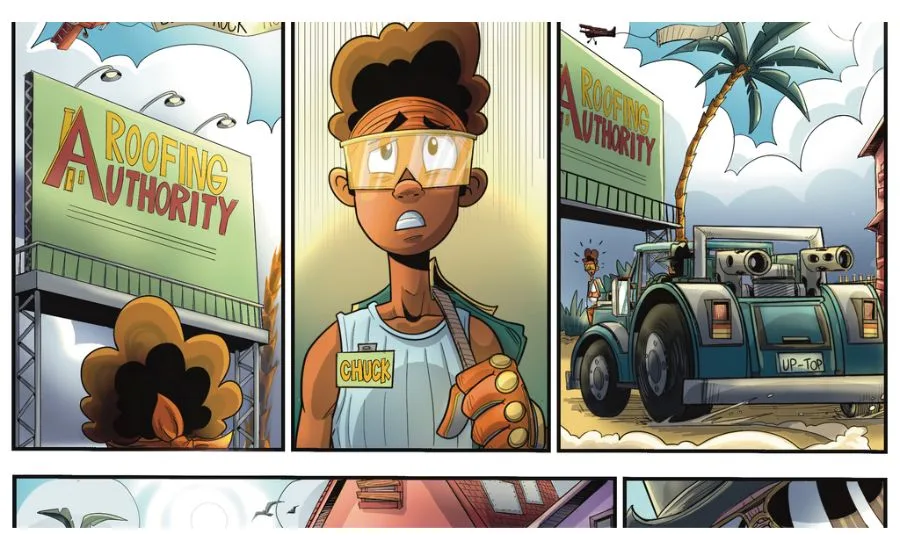
"Chuckaroofer," a new indie comic book written by Charles Clark and illustrated by Nicholas Forte, is designed to introduce middle school students to roofing careers.
Charles Clark believes the roofing industry’s next generation is sitting in a middle school class right now, and that contractors need to reach those students before anyone else does.
The former educator-turned-roofing ambassador is developing the industry’s first superhero comic book, a workforce development project designed to introduce students in grades five through eight to roofing careers. Its hero is a teenage roof inspector named Chuckaroofer, drawn by Nicholas Forte, an illustrator from Hickory, N.C. Charles Clark. Photo: Charles Clark.
 Clark’s idea is to give contractors, manufacturers and distributors something to hand out at career fairs and school assemblies—a tangible leave-behindthat keeps students engaged with the industry after the presentation ends.
He wants to use storytelling to give young readers a memorable introduction to roofing and show them that it includes far more career paths than they might realize: skilled labor, inspection, sales, and management.
Clark calls middle schoolers the "PRE — before the before — pre-apprenticeship age," a group he says the trades have largely overlooked. Elementary students often find construction fascinating, he said, but their interests shift as they grow; by high school, many kids drawn to the trades have already formed their plans. That leaves the middle years as the critical window.
"As a former middle school educator, this age group is very near to my heart," Clark said. "I believe they are the most crucial group to reach for the trades. And if they don't hear about the trades, they won't be getting into the trades."
Bureau of Labor Statistics data for 2025 show that about 45% of construction workers are between 35 and 54, while just over 10% are 24 or younger — figures that underscore the challenge of replacing experienced tradespeople as they leave the workforce. The open question, he said, is whether the industry can inspire young people who never considered a skilled trade in the first place.
"Everybody wants to reach the next generation, but we don't even take the time to actually go out of our way to talk to them," he said.
More than a Comic Book
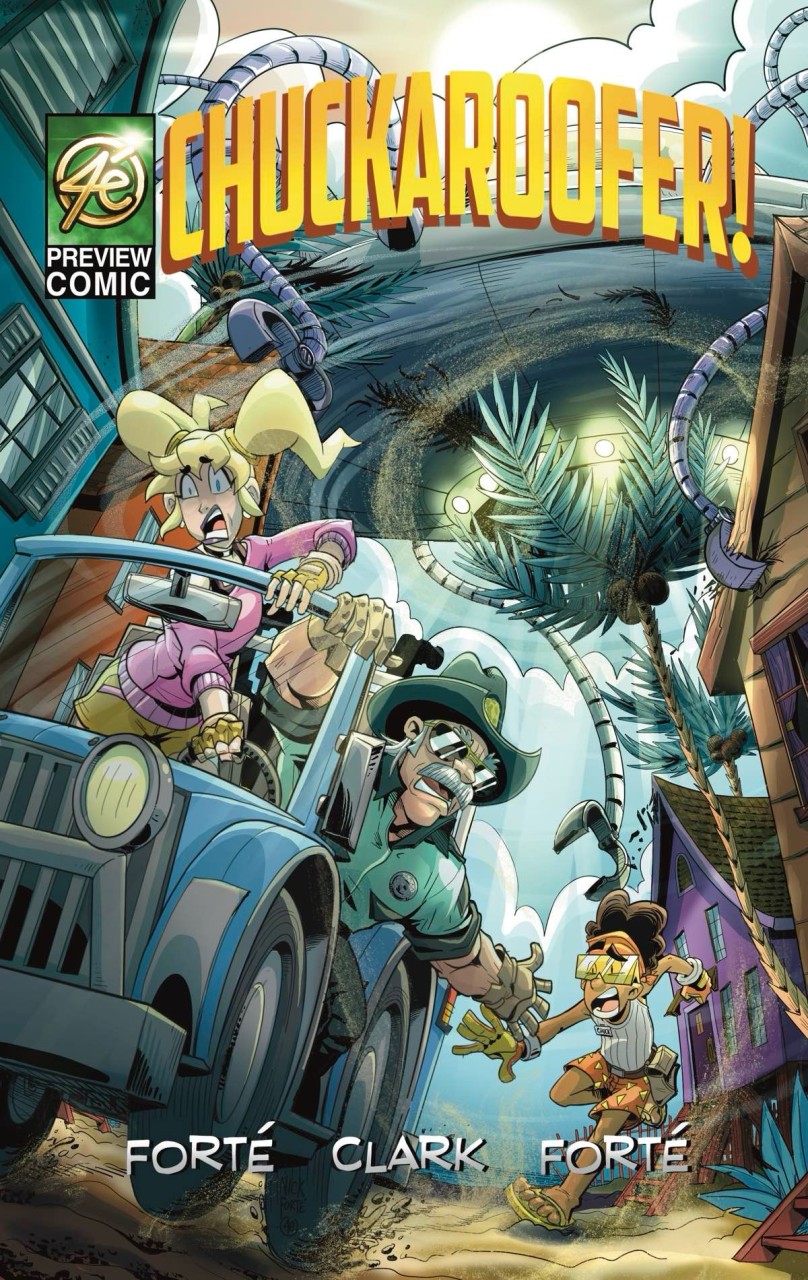
An indie comic book aimed at promoting roofing and the greater trades industry to the next generation. Photo: Charles Clark.
The comic is one piece of a broader outreach strategy. Clark also envisions what he calls "Next Generation Career Perception Discover Surveys" — gathering real-time information on how students view roofing and other trades — paired with school speaking engagements that put roofing professionals in front of students directly. The comic ties the effort together, and the surveys, he hopes, would help companies understand not just whether kids know roofing jobs exist, but what might change how they see them.
Clark is seeking support across the industry from manufacturers and distributors to individual contractors, and is preparing a Kickstarter campaign — currently in its "coming soon" phase — to help fund the comic and the accompanying local speaking tour. Interested backers can follow the project and preview it there ahead of launch.
Investing in the next generation means today's veterans can someday be "kept dry in your old age" by roofs installed by workers they helped inspire. But the ultimate ambition goes beyond publishing a comic.
"I’m passionate about this project because I’m trying to keep my job," Clark said. "If we don’t reach the next generation, a lot of people in the industry won’t have a job. Without the next generation, the roofing industry just doesn’t exist."
Clark wants roofing companies to carry the story into their own communities — walking into middle schools and meeting students face-to-face. Not the high school senior about to graduate, and not even the student ready for an apprenticeship. Start earlier with a student who hasn’t decided what they want to do it, and maybe start with a teenage apprentice named Chuck.
Looking for a reprint of this article?
From high-res PDFs to custom plaques, order your copy today!