Roofing Contractor Retention Starts with the Right Equipment
Equipment design, operator comfort, and training can help roofing companies address labor challenges.
National Roofing Week (June 7-13) was more than a celebration of the trade—it’s also a timely reminder of the pressures shaping roofing today. Businesses and homeowners are making a major investment and expect quality workmanship, while contractors are working to meet those expectations amid labor shortages, skills gaps and ongoing retention challenges. In that environment, retaining skilled operators is no longer just an HR concern; it is an operational necessity that can directly affect safety, productivity and customer satisfaction.
Retention Pressure in a Labor-Constrained Workforce
It's no secret that roofing and other construction industries have faced a tough year. Economic uncertainties, tariffs and inflation of materials costs are a top concern for roofing contractors, but a symptom of these problems is the impact on the workforce.
According to Roofing Contractor’s 2026 State of the Industry Report, 36% of contractors consider a lack of qualified workers their top concern for the past year.
Employers are competing for a limited pool of experienced operators, at the same time many teams are coping with retirements, turnover and a shortage of applicants who already hold the right skills, certifications or equipment experience. Sought-after candidates will often have technical expertise in roofing systems, material handling and installation experience, an understanding of digital workflow tools, and relevant safety training.
In this competitive environment, roofing contractors are evaluating more than wages and bonuses. They are paying close attention to what the work feels like day to day: equipment comfort, intuitive design, training effectiveness, workplace and jobsite safety and productivity, to name a few. For the nearly 180,000-member roofing workforce in the United States, the daily operating experience can strongly influence job satisfaction, performance and long-term commitment.
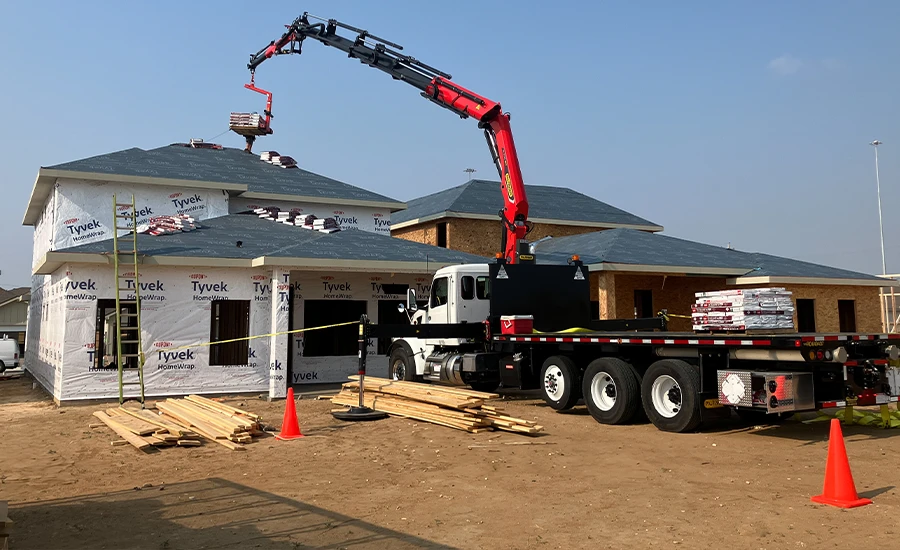
Photo: PALFINGER
Operator Comfort as a Holistic Experience
Operator comfort is not limited to a better seat or a smoother ride. It is a holistic experience shaped by ergonomics, visibility, maneuverability, stability, and how well equipment aligns with the work operators perform every day. When equipment reduces physical strain and cognitive load, job satisfaction improves.
Learn more about some common roofing equipment below:
Knuckle boom cranes
Knuckle boom cranes help roofing crews move materials with fast and accurate placement while making the operation easier in tight or crowded jobsites. Their articulated boom design and compact folding profile make it easier to maneuver in confined spaces, while advanced hydraulics support smooth, controlled movements that help operators position loads precisely with less effort. For instance, the PALFINGER TEC knuckle boom cranes can be equipped with Smart Control, letting operators control the crane tip with a single lever while the system coordinates boom movements for speed, precision and safety.
Truck-mounted forklifts
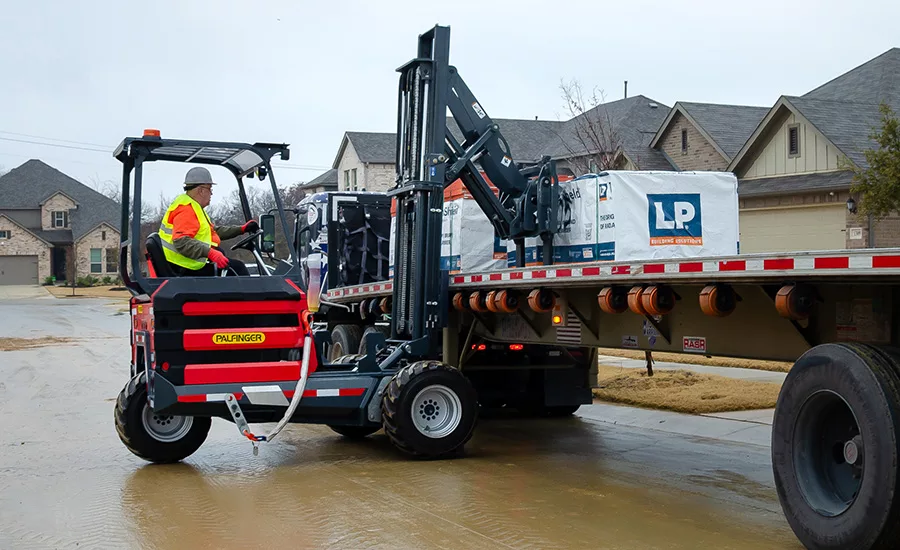
Truck-mounted forklifts give roofing crews a practical way to load and offload materials when jobsites are difficult to access or too constrained for larger equipment. They are especially useful on uneven terrain, narrow residential streets, confined alleys, and other hard-to-reach spaces where precise placement can save time and reduce unnecessary material handling. PALFINGER truck-mounted forklifts offer 70% more legroom, the ability to refuel from the ground, and brakes on all three wheels for maximum stopping power.
Material handling cranes
Material handling cranes are essential for efficiently delivering heavy roofing materials like plywood, drywall, shingles, and other bulk loads. By automating lifting and placement, they reduce manual labor, improve safety and keep job sites organized. Advanced hydraulics and intuitive controls ensure smooth and precise handling that boosts efficiency.
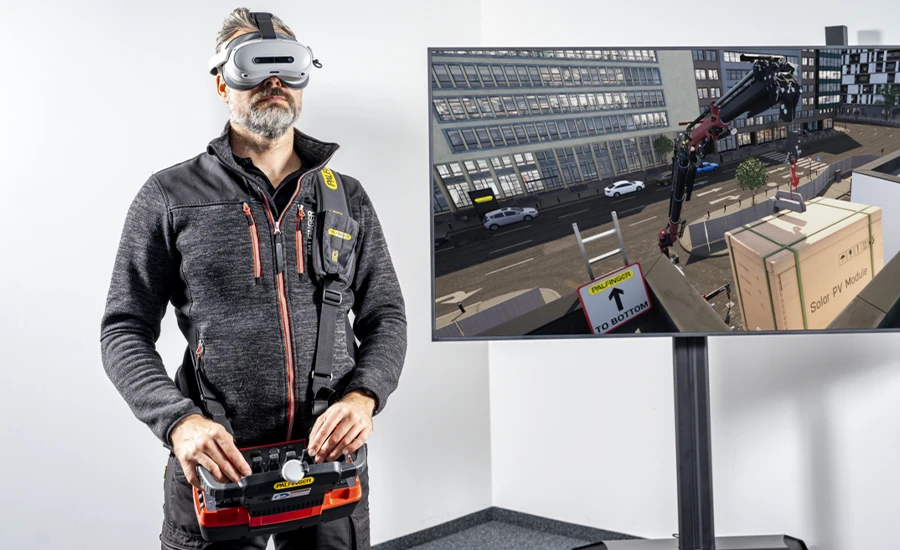
Photo: PALFINGER
Operator Training and Confidence
Even the best-designed equipment delivers limited value without effective training. Structured operator training helps people build muscle memory, understand handling characteristics and become comfortable with controls before they are expected to perform in high-pressure environments. For example, the PALFINGER VR2 Training Simulator gives operators an immersive way to build skills, strengthen safety awareness and gain readiness before they ever step onto the job site.
When organizations invest in practical, well-structured training, they prove to operators they are considered long-term contributors rather than interchangeable labor. The most effective programs mirror real jobsite conditions, including uneven surfaces, confined delivery areas, frequent mounting and dismounting and repeated load-handling tasks.
For companies facing chronic hiring challenges, training is also a retention strategy. It shortens the time it takes for new operators to become productive, helping them feel capable and supported. In a tight labor market, those outcomes can make the difference between a workforce that stays and one with high turnover.
Comfort and training are no longer nice-to-have considerations in roofing operations, but practical tools for building a more stable workforce. Equipment that reflects the realities of the job helps organizations stand out in a crowded labor market. Combined with training that builds competence and trust, operators can improve performance, and business owners can support long-term workforce resilience.
Looking for a reprint of this article?
From high-res PDFs to custom plaques, order your copy today!