Solar Roofing
Distributor Q&A: Is Solar Dead? SRS Distribution Weighs In
With the elimination of influential energy tax credits, roofing contractors and distributors must navigate a new market in 2026
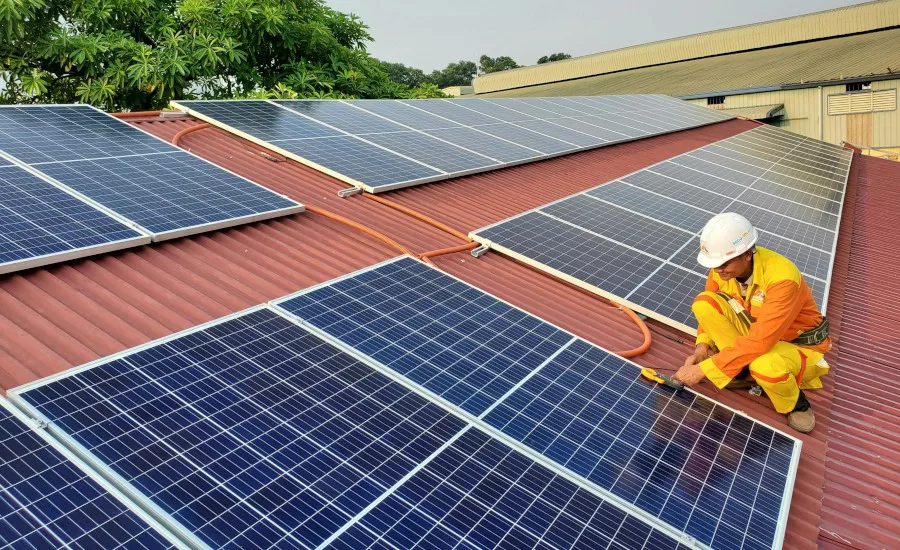
The Big Beautiful Bill, signed into law earlier this year, resulted in multiple cuts to clean energy tax provisions, putting roofing contractors, distributors and manufacturers in a bind.
Among the credits ending is Section 25D, an uncapped 30% non-refundable tax credit of eligible costs of purchasing and installing solar panels, solar water heaters, battery storage technology and geothermal heat pumps for residential projects. This will terminate for expenditures after Dec. 31, 2025.
Meanwhile, other credits are scheduled to end June 30, 2026, while others, like the Section 48E clean electricity investment credit, will be terminated for any facility placed in service after Dec. 31, 2027.
Despite these credits going away, solar still provides a viable vertical for contractors. Worldwide solar and wind power generation has outpaced electricity demand this year for the first time on record, according to a report from energy think tank Ember, showing the world could be weaning off polluting energy sources.
SRS Distribution is among the major roofing distributors involved in solar. RSP spoke with Bill Eitenmiller, director of sales – solar for SRS Distribution, and Jess Cress, branch manager at SRS Distribution’s Athena, Ga., location about the shifting solar landscape.
Editor's Note: Responses have been lightly edited for clarity and brevity
RSP: What are the most frequent questions you’re hearing from customers?
Bill Eitenmiller (BE): Most of the questions center on the tax credit going away and whether that means the industry is dead.
I don’t see it that way at all. Solar isn’t a niche product, and this moment actually signals a maturing industry—which is a good thing. Incentives can create market distortions, and when they’re removed, it allows the market to grow more organically based on real value.
Jess Cress (JC): It’s been incredibly eye-opening to see the amount of roofing companies that are interested. Just the questions about solar and how to get involved.
RSP: What were the biggest changes to energy tax credits to be aware of?
BE: The biggest change is on the residential homeowner side. Section 25D was the tax credit that allowed homeowners who owned their systems—typically through cash or loan purchases—to claim a 30% tax credit on eligible energy property. That credit did not apply to leases or PPAs, and it has now expired.
RSP: How are these cuts impacting the roof solar industry?
BE: We’re seeing a rush to get systems installed and energized by year-end so homeowners can still qualify under the old rules. But going into next year, the market will rebalance.
We expect something closer to 85–90% third-party-owned systems and 10–15% cash or loan purchases.
RELATED: November 2025 Product Focus: Solar
RSP: So are nationwide solar sales expected to decline?
BE: In markets where third-party ownership isn’t allowed, we’re expecting as much as a 50% decline in installs.
That said, there are still levers we can pull—lowering equipment costs, tightening system design, and improving execution—to make solar pencil out with a positive ROI for homeowners.
RSP: What about local or state energy credits?
BE: There are still a lot of strong state and local incentives outside of federal programs. Oregon is a good example—they have aggressive incentives for solar and storage that can save homeowners anywhere from $2,000 to $6,000 per project.
RSP: How is SRS Distribution adjusting its strategy?
BE: The old pitch was: go solar, get 30% back, reduce your tax liability, fast payback.
The new pitch for 2025 and beyond is energy control and resilience. A battery paired with a roof gives homeowners energy independence—locking in power costs for 20–25 years, avoiding peak rates and surprise bills, staying powered during outages, and increasing property value.
RSP: Are tariffs playing a role in solar sales?
BE: There are two primary areas of concern. The first is domestic content—making sure our line card is aligned with products that meet domestic content requirements.
RSP: Does the ROI on solar help offset these increases?
BE: Yes, because module pricing is only one part of the overall system economics. Even with higher costs tied to FIOC-compliant and domestic-content products, the impact on the total installed system cost is relatively modest.
At the same time, the value of the energy produced hasn’t changed, and in many markets, utility rates continue to rise. When you model these systems over a 10–15 year horizon, the incremental upfront cost is outweighed by long-term energy savings and predictable power costs.
So while compliant equipment does increase initial costs, the long-term ROI remains compelling.
RSP: How can roofing contractors take advantage of solar?
BE: A conservative estimate is that for about 10% of solar installs, a new roof is required. Installers get on the roof, see it’s eight or nine years old, and from an insurance standpoint, a replacement is often required or recommended.
That equates to roughly 625,000 new roofs in 2026, directly tied to solar—and that number will continue to grow year over year.
JC: The message is diversification. Expanding knowledge and offerings allows contractors to provide a more complete solution for homeowners and business owners.
RSP: Broadly speaking, is there still an opportunity for distributors and contractors to sell solar?
BE: Yes, and the key reason is that module [solar panel] pricing is only one part of the overall system economics. Even with higher costs for FIOC-compliant and domestic-content products, the increase in the total installed system cost is relatively modest.
Looking for a reprint of this article?
From high-res PDFs to custom plaques, order your copy today!