Leadership
Christopher Griffin on Three Decades at USG
As USG prepares for a planned CEO transition, outgoing President and CEO Christopher Griffin reflects on nearly 30 years at the company, the meaning of leadership, and stewarding a 125-year legacy.
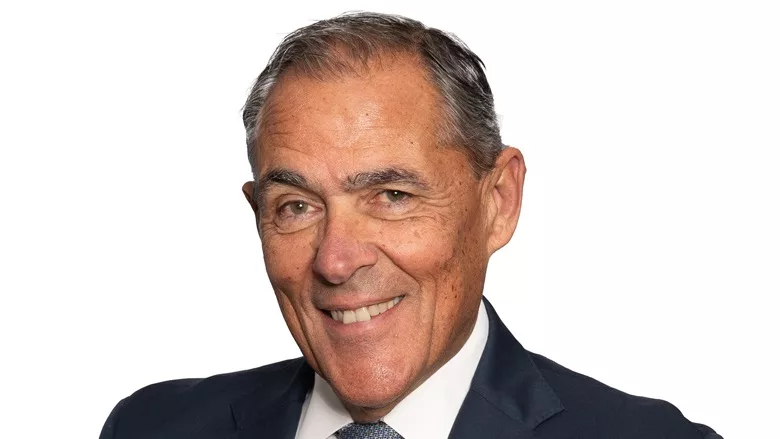
After nearly three decades at USG, President and CEO Christopher Griffin is preparing to step away later this year, closing a chapter shaped by reinvestment, cultural continuity, and a belief that leadership is as much about stewardship as strategy.
After nearly three decades at USG, President and CEO Christopher Griffin is preparing to step away later this year, closing a chapter shaped by reinvestment, cultural continuity, and a belief that leadership is as much about stewardship as strategy.
Griffin’s departure marks the culmination of a planned transition the company says has been years in the making. Chief Operating Officer Christopher Macey will assume the roles of president and CEO effective April 1, positioning USG for its next phase under private ownership while preserving the leadership continuity Griffin has long emphasized.
For Griffin, the moment feels less like an ending than a natural handoff—one shaped by time, timing, and the conviction that leadership has a shelf life. “I’ve been working for over 40 years,” he said. “My wife and I are so fortunate. I live a life today that I didn’t even know existed when I was 19, 20 years old and still starting.”
Griffin’s story begins far from USG’s Chicago headquarters, in the Toronto area, where he grew up in and around a small family contracting business that eventually became a building supply company. "I’m from the Toronto area originally,” he said. Over time, his role expanded beyond the family business. “I eventually became president of a buying group,” he added with a laugh. “As you know, everybody in Canada eventually joins buying groups.”
By his mid-30s, Griffin began to look outward. He had built a career in the industry, but he wanted to test himself against larger organizations. “I realized that we wanted to make a bit of a change,” he said. “The companies I admired at that time in Canada were the likes of CGC, Owens Corning.”
That opportunity arrived in 1997, when Griffin moved to Chicago and joined USG. His family followed the next year. “My friends at the time told me that I wouldn’t last six months working for a big company,” he recalled. “But it turned out that I was given opportunities at USG that I could never have imagined, running a small family business.”
His first role was in marketing on the ceilings side—work that leaned heavily on his field experience. “Because I had worked on the tools, I started off as somebody who was developing some programs to try and convert people to use our ceiling grid in the Chicago market,” Griffin said. “It was my first job with the company.”
As his career progressed, Griffin watched USG evolve physically and culturally. He described the company’s earlier Chicago offices with a kind of affectionate disbelief. “Do you remember the TV show Barney Miller?” he asked. “The USG offices looked like that … old steel case furniture, and a bunch of engineers with ties and short-sleeved shirts, everybody smoking.”
The company’s downtown footprint shifted over the years—from Wacker Drive to the AT&T Tower and eventually to its current building. Griffin remembered the milestone when the city recognized the company’s presence. “At our 100-year anniversary, they named that USG Way on Franklin Street,” he said.
That sense of longevity has always mattered to him. USG is now 125 years old, and Griffin sees leadership as stewardship. “I feel a great responsibility to be a steward of that legacy,” he said. But his own rise to the CEO role came during one of the company’s most significant transitions.
In 2019, USG was acquired by Knauf and returned to private ownership. That same year, Griffin became CEO. The shift, he argued, fundamentally changed how the company could think about investment and resilience in a cyclical industry. “We believe that being private and able to take a long-term view allowed us to reinvest in our facilities,” he said. “It’s not feast and famine like it had traditionally been.”
Related: State of the Industry 2026 Q&A
Griffin points to reinvestment in manufacturing as a central theme of his tenure. USG’s plants—some of them more than a century old—needed modernization after years marked by major disruptions, including asbestos-related bankruptcy in the early 2000s and the Great Recession. “We’ve had a lot of investment to catch up,” he said. “We called it Project Home … a place where you’d want your sons and daughters to come and work again.”
For Griffin, this isn’t abstract. He believes manufacturing is a “noble profession,” and he wants the industry to reclaim that identity for the next generation. “People are going to have to build stuff, repair stuff, fix stuff,” he said. “We’re not going AI our way out of that.”
When asked what he hopes his legacy will be, Griffin doesn’t lead with market share, product launches, or acquisitions. He leads with culture. “People first,” he said. “If you hire the right people, put the right team on the field, you win.”
He’s proud of the company’s multigenerational workforce, and he sees that continuity as something rare—and fragile. “When you visit some of our facilities, you meet second, third, even fourth generation people,” Griffin said. “To maintain that is a huge part of our company DNA.”
That people-first mindset also shapes how he thinks about succession. Griffin said he believes CEOs have a window where they are most effective—and that staying too long can harm both the leader and the team. “I’ve been at this job as CEO since 2019, and I do believe that there’s a sort of a five- to seven-year window where you’re most effective,” he said. “I’m coming up to the end of that window.”
He also framed the decision in practical terms. “In any big organization, if I don’t leave, somebody else will,” he said. “I’ve got a strong team. They’re ready to take the mantle and do even more.”
As he looks ahead, Griffin’s personal plans are clear. He and his wife, Carmela, will split time between Arizona and Ontario. “I made the mistake of bringing Carmela out to the desert in Arizona about 20 years ago, and she fell in love,” he said. “Our plan will be Arizona seven or eight months a year, and Haliburton, Ontario, three or four months a year.”
While he’s optimistic about the company’s future, Griffin acknowledges near-term volatility in construction markets. “We’re certainly in a slowdown with regards to housing,” he said. “Office has been anemic since COVID.” Still, he believes the long-term fundamentals are strong, especially if the U.S. confronts the housing affordability gap. “We’ve got to solve the affordability gap for people,” he said. “The fundamentals would just suggest we have to.”
If there’s a risk he worries about, it’s not technology or disruption. It’s hesitation. “The one thing we could miss is not investing fast enough for the recovery that’s about to come,” Griffin said.
When asked what he will miss most, his answer comes quickly and it’s the same one he returns to throughout the conversation. “It’s easy,” he said. “It’s the people. Every time I spend time with my team, it gives me energy. That I will miss.”
Looking for a reprint of this article?
From high-res PDFs to custom plaques, order your copy today!