Cool Roofing: High-Performance Building with Energy-Efficient Vinyl Roofs
In full sun, the surface of a black low-slope roof may experience a temperature rise of as much as 50 to 90 degrees Fahrenheit (F), reaching midday temperatures of 150 to 190 F on a summer day. A white vinyl/PVC reflective roof on the same building typically increases only 10 to 25 degrees above ambient temperature under the same conditions. A differential of this magnitude begs the question: What makes one roofing material “cooler” than another?
In full sun, the surface of a black low-slope roof may experience a temperature rise of as much as 50 to 90 degrees Fahrenheit (F), reaching midday temperatures of 150 to 190 F on a summer day. A white vinyl/PVC reflective roof on the same building typically increases only 10 to 25 degrees above ambient temperature under the same conditions. A differential of this magnitude begs the question: What makes one roofing material “cooler” than another?
When a roof system can deliver a high solar reflectance, or albedo (the reflecting of sunlight from the roof’s surface), and a high thermal emittance (the radiating away of most of the solar energy absorbed), it is regarded as a cool roof.
Reflective roofing technologies are increasingly included in federal, state and local energy codes. California’s building energy code, known as Title 24, requires cool roofs for low-slope buildings when the owner or developer is using the program’s prescriptive envelope component approach. To meet those requirements, a roofing material’s initial thermal emittance must be 75 percent or greater and initial solar reflectance must be 70 percent or greater.
To qualify as a cool roof, Title 24 also calls for a membrane to be certified by the Cool Roof Rating Council. CRRC sponsors a third-party testing and rating program that provides credible reflectance and emittance data on roof surfaces for building code bodies, energy service providers, architects, specifiers, property owners and community planners.
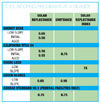
A roof system that performs to such standards will contribute significantly to reducing both building cooling loads and the urban “heat island” effect - two reasons why the criteria for LEED, ENERGY STAR, Green Globes and California’s Title 24 can be met through the use of a white reflective vinyl roof. Planted and solar-integrated roof systems, both of which may utilize vinyl roofing membranes, also fall into this category. (See the chart in Figure 1 for various green building program criteria.)
In a 2001 federal study titled “Measured Energy Savings and Demand Reduction from a Reflective Roof Membrane on a Large Retail Store in Austin,” the Lawrence Berkeley National Laboratory (LBNL) measured and calculated the reduction in peak energy demand associated with the surface reflectivity of a vinyl roof on a retail building in Austin, Texas.
Instruments measured weather conditions on the roof, temperatures inside the building and throughout the roof layers, and air conditioning and total building power consumption. Measurements were taken with the original black roofing membrane and then after replacement with a white vinyl roof with the same insulation and HVAC systems in place.
LBNL found that the average daily summertime temperature of the black roof surface was 168 degrees F, but once retrofitted with a white reflective surface, it measured 125 degrees F. In conjunction with those findings, LBNL indicated that, compared to the original black membrane, the retrofitted vinyl membrane delivered an average decrease of 42 degrees in surface temperature, an 11 percent decrease in aggregate air conditioning energy consumption and a corresponding 14 percent drop in peak hour demand. Without considering any tax benefits or other utility charges, annual energy expenditures were reduced by $7,200, or 7 cents per square foot.
• Long service life.
• White reflective surface.
• Light weight and low material consumption.
• Low maintenance requirements.
Vinyl membranes are recyclable at both the post-industrial and post-consumer phases. Although their long service life does not yet yield a large quantity of these membranes, vinyl roofs are the focus of established recycling programs in Europe, and the industry is actively researching and investing in technologies to improve the availability of recycling alternatives in North America.
Cool vinyl roofs provide environmental and economic benefits, typically without an installed cost premium and without sacrificing any other roofing performance attribute. In some jurisdictions, local codes allow a reduction in insulation when cool roofing is employed. That’s because in cooling-dominated climates, less insulation is needed as the building’s cooling load is reduced.
By contrast, when the temperature of the insulation increases, such as was noted with the rooftop temperature increases of black roofs, the thermal conductivity of the insulation increases. (See Budaiwi, I., Abdou, A. and Al-Homoud, M., “Variations of Thermal Conductivity of Insulation Materials Under Different Operating Temperatures: Impact on Envelope-Induced Cooling Load,” Journal of Architectural Engineering, December 2002.) This means that the R-value of the insulation has decreased and, along with it, the insulative performance. Cool vinyl roofs may also enhance the life expectancy of both the membrane and the building cooling equipment through reduced temperature stress on those components.
More than just a sensible green building design approach, cool vinyl roofing is a significant solution to critical national energy and environmental challenges.
For more information on cool vinyl roofing, visit the Cool Roof Clearinghouse at www.vinylroofs.org/cool.html.
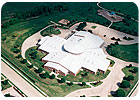
The Brinker Elementary School in Plano, Texas, sports an energy-saving vinyl roof system. Photo courtesy of Vinyl Roofing Division, Chemical Fabrics and Film Association.
In full sun, the surface of a black low-slope roof may experience a temperature rise of as much as 50 to 90 degrees Fahrenheit (F), reaching midday temperatures of 150 to 190 F on a summer day. A white vinyl/PVC reflective roof on the same building typically increases only 10 to 25 degrees above ambient temperature under the same conditions. A differential of this magnitude begs the question: What makes one roofing material “cooler” than another?
When a roof system can deliver a high solar reflectance, or albedo (the reflecting of sunlight from the roof’s surface), and a high thermal emittance (the radiating away of most of the solar energy absorbed), it is regarded as a cool roof.
Reflective roofing technologies are increasingly included in federal, state and local energy codes. California’s building energy code, known as Title 24, requires cool roofs for low-slope buildings when the owner or developer is using the program’s prescriptive envelope component approach. To meet those requirements, a roofing material’s initial thermal emittance must be 75 percent or greater and initial solar reflectance must be 70 percent or greater.
To qualify as a cool roof, Title 24 also calls for a membrane to be certified by the Cool Roof Rating Council. CRRC sponsors a third-party testing and rating program that provides credible reflectance and emittance data on roof surfaces for building code bodies, energy service providers, architects, specifiers, property owners and community planners.
Figure 1. A summary of various green building program criteria
ACHIEVING GREEN BUILDING OBJECTIVES WITH COOL VINYL
White or light-colored, single-ply vinyl membranes are not only durable, but they achieve some of the highest reflectance and emittance measurements of which roofing materials are capable. Vinyl roofs can reflect three-quarters of the sun’s rays - usually far more - and emit 70 percent or more of the solar radiation absorbed.A roof system that performs to such standards will contribute significantly to reducing both building cooling loads and the urban “heat island” effect - two reasons why the criteria for LEED, ENERGY STAR, Green Globes and California’s Title 24 can be met through the use of a white reflective vinyl roof. Planted and solar-integrated roof systems, both of which may utilize vinyl roofing membranes, also fall into this category. (See the chart in Figure 1 for various green building program criteria.)
COMBATING THE HEAT ISLAND EFFECT
Urban heat islands are caused by the combination of dark asphalt parking lots and road pavement, sparse vegetation, and expanses of black rooftops and other heat-absorbing infrastructure. In these environments, ambient air temperatures can be as much as 8 to 10 degrees higher than the temperature of the surrounding countryside. An objective of all green building programs is to mitigate this effect and improve air quality by lowering surrounding air temperature and reducing smog formation.Shown is the vinyl roofing system on Brinker Elementary School in Plano, Texas. Photo courtesy of Vinyl Roofing Division, Chemical Fabrics and Film Association.
EASING THE STRAIN ON THE GRID AND THE BUDGET
Naturally, buildings located in these heat islands are likely to consume more energy for air conditioning than a cooler building would - a strain on both operating costs and the electric power grid. Cool vinyl roofs offer both immediate and long-term savings in building energy costs.In a 2001 federal study titled “Measured Energy Savings and Demand Reduction from a Reflective Roof Membrane on a Large Retail Store in Austin,” the Lawrence Berkeley National Laboratory (LBNL) measured and calculated the reduction in peak energy demand associated with the surface reflectivity of a vinyl roof on a retail building in Austin, Texas.
Instruments measured weather conditions on the roof, temperatures inside the building and throughout the roof layers, and air conditioning and total building power consumption. Measurements were taken with the original black roofing membrane and then after replacement with a white vinyl roof with the same insulation and HVAC systems in place.
LBNL found that the average daily summertime temperature of the black roof surface was 168 degrees F, but once retrofitted with a white reflective surface, it measured 125 degrees F. In conjunction with those findings, LBNL indicated that, compared to the original black membrane, the retrofitted vinyl membrane delivered an average decrease of 42 degrees in surface temperature, an 11 percent decrease in aggregate air conditioning energy consumption and a corresponding 14 percent drop in peak hour demand. Without considering any tax benefits or other utility charges, annual energy expenditures were reduced by $7,200, or 7 cents per square foot.
FAVORABLE LIFECYCLE IMPLICATIONS
A recent study of low-slope roofing systems conducted by independent Swiss environmental consultant Carbotech AG, “Ecological and Economical Balance Assessment of U.S. Flat Roof Systems,” found the lowest impacts and costs to both the building owner and the environment came through selection of a white single-ply vinyl membrane. In order of priority, the cited reasons were:• Long service life.
• White reflective surface.
• Light weight and low material consumption.
• Low maintenance requirements.
Vinyl membranes are recyclable at both the post-industrial and post-consumer phases. Although their long service life does not yet yield a large quantity of these membranes, vinyl roofs are the focus of established recycling programs in Europe, and the industry is actively researching and investing in technologies to improve the availability of recycling alternatives in North America.
Cool vinyl roofs provide environmental and economic benefits, typically without an installed cost premium and without sacrificing any other roofing performance attribute. In some jurisdictions, local codes allow a reduction in insulation when cool roofing is employed. That’s because in cooling-dominated climates, less insulation is needed as the building’s cooling load is reduced.
By contrast, when the temperature of the insulation increases, such as was noted with the rooftop temperature increases of black roofs, the thermal conductivity of the insulation increases. (See Budaiwi, I., Abdou, A. and Al-Homoud, M., “Variations of Thermal Conductivity of Insulation Materials Under Different Operating Temperatures: Impact on Envelope-Induced Cooling Load,” Journal of Architectural Engineering, December 2002.) This means that the R-value of the insulation has decreased and, along with it, the insulative performance. Cool vinyl roofs may also enhance the life expectancy of both the membrane and the building cooling equipment through reduced temperature stress on those components.
More than just a sensible green building design approach, cool vinyl roofing is a significant solution to critical national energy and environmental challenges.
For more information on cool vinyl roofing, visit the Cool Roof Clearinghouse at www.vinylroofs.org/cool.html.
Looking for a reprint of this article?
From high-res PDFs to custom plaques, order your copy today!