Enhancing Single Ply Wind Performance
Wind-related failures can occur on all types of roofing systems, but the potential for membrane displacement from a “peeling” action occurs primarily on fully adhered roofing systems.
 Single-ply roofing systems have a long and successful performance record in the low-slope roofing industry, with some materials now touting up to 40 years of performance history. In general, adhered roofs offer good wind uplift resistance and meet FM Global and Underwriters Laboratories wind uplift requirements.
However, in some areas of the United States, roofing systems may experience extreme wind events that challenge their ability to remain in place. Wind-related failures can occur on all types of roofing systems, but the potential for membrane displacement from a “peeling” action occurs primarily on fully adhered roofing systems.
Peel failure occurs when an adhered membrane separates from the underlying substrate, or the separation occurs within the substrate itself (i.e., a facer peeling away from an insulation board). The good news for contractors and roofing specifiers is there are some low-cost system enhancements for adhered roofing systems that will help reduce the potential for catastrophic loss during a hurricane or other high wind event.
There are many causes of peel-type damage to roofing systems during high wind events. These include roof edge failure, inadequate perimeter and corner attachment, air infiltration below the membrane, internal pressurization of the building, and even membrane damage due to flying debris. Of these causes, edge failure is the failure mode cited most often by the Roofing Industry Committee on Weather Issues (RICOWI). Similarly, FM Approvals cites edge damage in 79 percent of 145 cases of insurance losses experienced after high wind events.
The peel-failure phenomenon can occur in two basic ways. In the first case, the edge termination fails and becomes a sail to catch wind, allowing the wind to progressively peel the membrane from the perimeter edge inward toward the center of the roof.
In the second failure mode, the membrane remains attached at the edge but it separates from the substrate and “balloons.” This ballooning action creates increasing peel forces around the edges of the balloon and causes the ballooned area to progressively expand. In either case, the peel action will continue until stopped by a physical feature or roof system enhancement.
Recent RICOWI research has helped illustrate the effects of wind forces at the edge of the roof and points out the effectiveness of a “peel stop” type of restraint to resist progressive damage that could otherwise occur. Peel stops fall into various categories, including emergency on-the-job measures, intentionally designed securement systems and unintentional barriers.
The emergency use of sandbags by roofing contractors or building personnel can prevent further peel of the membrane after a high wind event. As the river rock in a ballasted single-ply roof collects at the edge of the billowing membrane, enough weight accumulates to stop the progressive ballooning action. Curbs and pipes can also stop a membrane from peeling across a roof.
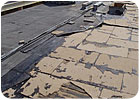
In the case of adhered systems, system-inherent membrane restraints, such as the piling of river rock ballast or rows of mechanical fasteners, do not exist as a feature of the system. Therefore, a peel-stop device would need to be intentionally designed into adhered roofing systems.
The basic concept of a peel-stop design (also referred to as a “storm strip,” “hurricane strip” or “hurricane bar”) is to install a termination device (typically a bar or a fastened reinforced membrane strip) approximately 12 inches away from the roof edge or parapet wall around the entire roof perimeter. The device is attached with mechanical anchors to the structural deck using fasteners spaced 6 inches on center.
There are numerous variations to the peel-stop design. For example, the termination device can be placed within the membrane field splice or over the membrane and then “stripped in,” or even placed below the membrane with the membrane adhered to it.
A peel-stop device can even be used to terminate the perimeter membrane directly to the structural deck, completely isolating the perimeter area from the rest of the roof. Depending on the severity of expected wind exposure, additional rows of the termination device can also be installed.
Despite the generally positive performance history of adhered roofing systems in extreme wind events, Single Ply Roofing Industry (SPRI) members recommend the inclusion of peel-stop devices. These systems are a low-cost, common sense design enhancement for adhered roofing systems installed in High Velocity Hurricane Zones (HVHZ), or when the designer is otherwise concerned about the possibility of high wind events. (Note: The use of a high-density gypsum cover board can also dramatically enhance the peel resistance of many low-slope roofing systems.)
Roofing contactors and specifiers should contact the roofing system materials manufacturer or supplier to discuss the appropriate peel-stop design options.
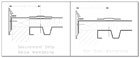
(L.) In this example, the contractor has installed a securement strip below the roofing membrane to serve as a Peel Stop that will enhance wind uplift resistance. (R.) One peel-stop design features the installation of a termination device (typically a bar or a fastened reinforced membrane strip) approximately 12 inches away from the roof edge or parapet wall around the entire roof perimeter. (Illustrations courtesy of SPRI and RICOWI.)
However, in some areas of the United States, roofing systems may experience extreme wind events that challenge their ability to remain in place. Wind-related failures can occur on all types of roofing systems, but the potential for membrane displacement from a “peeling” action occurs primarily on fully adhered roofing systems.
Peel failure occurs when an adhered membrane separates from the underlying substrate, or the separation occurs within the substrate itself (i.e., a facer peeling away from an insulation board). The good news for contractors and roofing specifiers is there are some low-cost system enhancements for adhered roofing systems that will help reduce the potential for catastrophic loss during a hurricane or other high wind event.
There are many causes of peel-type damage to roofing systems during high wind events. These include roof edge failure, inadequate perimeter and corner attachment, air infiltration below the membrane, internal pressurization of the building, and even membrane damage due to flying debris. Of these causes, edge failure is the failure mode cited most often by the Roofing Industry Committee on Weather Issues (RICOWI). Similarly, FM Approvals cites edge damage in 79 percent of 145 cases of insurance losses experienced after high wind events.
The peel-failure phenomenon can occur in two basic ways. In the first case, the edge termination fails and becomes a sail to catch wind, allowing the wind to progressively peel the membrane from the perimeter edge inward toward the center of the roof.
In the second failure mode, the membrane remains attached at the edge but it separates from the substrate and “balloons.” This ballooning action creates increasing peel forces around the edges of the balloon and causes the ballooned area to progressively expand. In either case, the peel action will continue until stopped by a physical feature or roof system enhancement.
Recent RICOWI research has helped illustrate the effects of wind forces at the edge of the roof and points out the effectiveness of a “peel stop” type of restraint to resist progressive damage that could otherwise occur. Peel stops fall into various categories, including emergency on-the-job measures, intentionally designed securement systems and unintentional barriers.
The emergency use of sandbags by roofing contractors or building personnel can prevent further peel of the membrane after a high wind event. As the river rock in a ballasted single-ply roof collects at the edge of the billowing membrane, enough weight accumulates to stop the progressive ballooning action. Curbs and pipes can also stop a membrane from peeling across a roof.
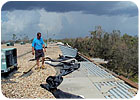
A few roof curbs and pipes eventually stopped this membrane from peeling across the field of the roof during Hurricane Charley. (Photo courtesy of RICOWI.)
Roof Membrane Restraints
On mechanically fastened single-ply systems, the fastener rows used to secure the membrane can also serve as an unintentional membrane restraint mechanism (or peel stop) and limit exposure of the substrate should edge attachment be lost during a storm.In the case of adhered systems, system-inherent membrane restraints, such as the piling of river rock ballast or rows of mechanical fasteners, do not exist as a feature of the system. Therefore, a peel-stop device would need to be intentionally designed into adhered roofing systems.
The basic concept of a peel-stop design (also referred to as a “storm strip,” “hurricane strip” or “hurricane bar”) is to install a termination device (typically a bar or a fastened reinforced membrane strip) approximately 12 inches away from the roof edge or parapet wall around the entire roof perimeter. The device is attached with mechanical anchors to the structural deck using fasteners spaced 6 inches on center.
There are numerous variations to the peel-stop design. For example, the termination device can be placed within the membrane field splice or over the membrane and then “stripped in,” or even placed below the membrane with the membrane adhered to it.
A peel-stop device can even be used to terminate the perimeter membrane directly to the structural deck, completely isolating the perimeter area from the rest of the roof. Depending on the severity of expected wind exposure, additional rows of the termination device can also be installed.
Despite the generally positive performance history of adhered roofing systems in extreme wind events, Single Ply Roofing Industry (SPRI) members recommend the inclusion of peel-stop devices. These systems are a low-cost, common sense design enhancement for adhered roofing systems installed in High Velocity Hurricane Zones (HVHZ), or when the designer is otherwise concerned about the possibility of high wind events. (Note: The use of a high-density gypsum cover board can also dramatically enhance the peel resistance of many low-slope roofing systems.)
Roofing contactors and specifiers should contact the roofing system materials manufacturer or supplier to discuss the appropriate peel-stop design options.
Looking for a reprint of this article?
From high-res PDFs to custom plaques, order your copy today!



-system.webp?height=200&t=1771248143&width=200 "TruFast TruBond Induction Weld (IW) system.jpg")