Energy Calculators
ENERGY STAR’s Roofing Comparison Calculator is equipped with a user-friendly functionality that anyone on the building team can use with ease. Developed by the U.S. Environmental Protection Agency as part of its mission to accelerate the market penetration of energy-efficient building technologies, the calculator analyzes several key variables, and is a highly recommended exercise when contemplating a change from a black roof system to an ENERGY STAR-rated white one, or determining the savings when considering among alternatives on a new building.
Common sense tells us that a low-slope reflective roofing system should improve a building’s energy efficiency and save money on energy costs versus a black roof. After all, in full sun, the surface of a black roof may experience a temperature rise of as much as 90 degrees Fahrenheit, reaching mid-day temperatures of 150-190 degrees. A white reflective roof typically increases only 10 to 25 degrees above ambient temperature under the same conditions.
But how can you get a quantitative analysis of the potential energy savings for your building without performing a detailed building energy simulation? Simpler Web-based tools exist that can help architects, specifiers, roofing contractors, building owners or facility managers assign an estimated value on the annual energy savings that can accrue during the life of a typical commercial white reflective roof versus a non-reflective black roof.
 ENERGY STAR’s Roofing Comparison Calculator is one such tool, equipped with a user-friendly functionality that anyone on the building team can use with ease. Developed by the U.S. Environmental Protection Agency as part of its mission to accelerate the market penetration of energy-efficient building technologies, the calculator analyzes several key variables, and is a highly recommended exercise when contemplating a change from a black roof system to an ENERGY STAR-rated white one, or determining the savings when considering among alternatives on a new building.
The calculator automatically balances cooling savings from a light-colored roof with minor increases in heating costs - sometimes referred to as the heating penalty - that could accrue by not having a dark roof in the winter. (Many buildings with black roofs have de facto white roofs at least part of the winter due to snow cover.)
Savings from installing ENERGY STAR-labeled roof products will depend on the geographic location and climate where it is installed, existing insulation levels in the building, the type of roof it replaces, the type of roof installed, and how efficient the HVAC system is. Roofs that are lightly insulated, i.e., roofs with 1 inch of insulation or less, will see the greatest savings. The following inputs are evaluated:
 The heating and cooling degree day information generated from this exercise can be moved into other calculators for insulation, which are also available online. ASHRAE 90.1, the national model energy code for commercial buildings, sets forth the degree to which a project’s insulation may be reduced (by climate zone) if a cool roof is installed.
It’s hard to ignore year-after-year energy savings on a roof system that will be a part of your building for many years. ENERGY STAR-rated cool roofing systems are an easy choice to save on cooling costs and reduce energy consumption.
For more information about cool roofing, and to find links to this and other cool roof calculators, visit www.vinylroofs.org.
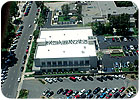
Creating an oasis of cool white amidst a sea of asphalt and darker roofs, a Duro-Last roof is shown on the Best Western Hotel, Page, Ariz. Photo courtesy of Vinyl Roofing Division, Chemical Fabrics and Film Association.
Common sense tells us that a low-slope reflective roofing system should improve a building’s energy efficiency and save money on energy costs versus a black roof. After all, in full sun, the surface of a black roof may experience a temperature rise of as much as 90 degrees Fahrenheit, reaching mid-day temperatures of 150-190 degrees. A white reflective roof typically increases only 10 to 25 degrees above ambient temperature under the same conditions.
But how can you get a quantitative analysis of the potential energy savings for your building without performing a detailed building energy simulation? Simpler Web-based tools exist that can help architects, specifiers, roofing contractors, building owners or facility managers assign an estimated value on the annual energy savings that can accrue during the life of a typical commercial white reflective roof versus a non-reflective black roof.
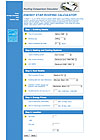
ENERGY STAR Roofing Calculator.
The calculator automatically balances cooling savings from a light-colored roof with minor increases in heating costs - sometimes referred to as the heating penalty - that could accrue by not having a dark roof in the winter. (Many buildings with black roofs have de facto white roofs at least part of the winter due to snow cover.)
Savings from installing ENERGY STAR-labeled roof products will depend on the geographic location and climate where it is installed, existing insulation levels in the building, the type of roof it replaces, the type of roof installed, and how efficient the HVAC system is. Roofs that are lightly insulated, i.e., roofs with 1 inch of insulation or less, will see the greatest savings. The following inputs are evaluated:
- Building Details - The building’s age, use and number of days of operation per week.
- HVAC - Efficiency ratings of the building’s HVAC system, factoring in the system’s age and rigor with which it is maintained; use of ENERGY STAR-labeled products can be noted. With many air conditioning units already absorbing massive amounts of solar energy from rooftop locations, a surrounding cool roof can do much to reduce the strain on the system over time.
- Roof Details - R-value of the insulation; solar reflectance value of the existing dark roof; that same value for the reflective material being considered, and the square footage of the air-conditioned roof area.
- Energy Prices - Electricity/natural gas costs for the area; if this data is not at hand, the U.S. Energy Information Administration (www.eia.doe.gov) generates average energy prices by state.
- Building Location - City and state only; needed to generate cooling and heating degree day calculations from the nearest National Weather Service facility. These indices express the difference between a reference value of a comfortable 65° F/18° C and the average outside temperature, leading to the number of “degree days” the temperature variations are likely to result in heating or air conditioning decisions.
Duro-Last roof shown on the Chino Medical Group, Chino, Calif. Photo courtesy of Vinyl Roofing Division, Chemical Fabrics and Film Association.
It’s hard to ignore year-after-year energy savings on a roof system that will be a part of your building for many years. ENERGY STAR-rated cool roofing systems are an easy choice to save on cooling costs and reduce energy consumption.
For more information about cool roofing, and to find links to this and other cool roof calculators, visit www.vinylroofs.org.
Looking for a reprint of this article?
From high-res PDFs to custom plaques, order your copy today!