State of the Industry Report Survey
The fourth quarter of 2008 was a tumultuous
time. A presidential election was taking place. Commodity prices were volatile.
As the economy was in turmoil and bailouts and loans seemed the only ways to
salvage the financial and automotive sectors of the economy, Roofing Contractor
turned to contractors to take the pulse of the roofing industry in an exclusive
survey sponsored by GAF Materials Corporation.
The fourth quarter of 2008 was a tumultuous time. A presidential election was taking place. Commodity prices were volatile. As the economy was in turmoil and bailouts and loans seemed the only ways to salvage the financial and automotive sectors of the economy, Roofing Contractor turned to contractors to take the pulse of the roofing industry in an exclusive survey sponsored by GAF Materials Corporation. Roofing Contractor magazine partnered with Clear Seas Research to conduct a research study to gauge roofing contractors’ sense of the commercial and residential roofing market. We also wanted to see how contractors expected the market to react over the next 12 months and the next three years.
Specific research objectives of the State of the Industry study included:
The survey was conducted in October and November of 2008. Clear Seas Research contacted 18,627 contractors for the Web-based survey, and 437 contractors participated for a response rate of 2 percent.
Seventy-five percent of study participants have the title of owner, president, vice president or CEO, while another 20 percent were managers or supervisors. The contractors surveyed came from companies averaging 29 employees, but more than half of the respondents employ 10 or fewer workers. The average gross annual sales for 2008 among all survey participants was just under $5 million. Nearly three-fifths reported annual sales of at least $1 million.
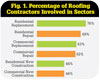
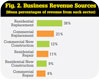
One-fourth of study participants exclusively do residential work, while one-fifth only do commercial work. The remaining 56 percent do both residential and commercial work, the majority of it consisting of replacement or repair. Figure 1 lists the percentage of roofing contractors involved in each sector; 76 percent of respondents do residential replacement work, 68 percent do residential repairs, 63 percent do commercial replacement, and 62 percent do commercial repairs. On average, 59 percent of their total revenue comes from replacement work, while 21 percent comes from new construction and 19 percent from repairs (Figure 2).
 Sales Volume
Despite the slumping economy, more roofing contractors expected their total 2008 sales volume to increase from the 2007 level than expected it to decrease (Figure 3). Forty-five percent expected better sales in 2008 than 2007, while 39 percent expected sales to decline. Seventeen percent expected sales to remain the same.
Most are optimistic that sales volume will increase in 2009 and over the next three years. In 2009, 49 percent expect sales to increase, 30 percent expect them to decrease, and 21 percent expect them to stay the same (Figure 4). Three-quarters of contractors surveyed expect sales volumes to increase over the next three years, while 10 percent expect them to decrease and 14 percent believe they will stay the same (Figure 5).
Of those expecting increased revenue in 2009, the average projected increase is 21 percent. Those expecting decreased revenue in 2009 projected an average decrease of 22 percent; however, almost half of those expecting a decrease projected a decline of 6 percent to 15 percent.
Among those with residential roofing business, two out of five expect their 2008 residential roofing sales to increase compared to 2007. Notably more roofing contractors expect the residential sector to grow rather than decrease in 2009 (48 percent) and next three years (68 percent). Those predicting an increase in their 2009 residential roofing sales predict an average of a 19 percent gain, while those expecting a decrease project an average decline of 24 percent.
On the commercial side, a significantly higher percentage of roofing contractors expect their commercial roofing sales to increase from last year as well as in the future. Nearly one-half of respondents expect commercial sales to increase in 2009, while 61 percent expect them to increase in the next three years. Roofing contractors who expect to see an increase in their 2009 commercial roofing sales estimate an average increase of 17 percent, while those expecting a decrease project an average decline of 23 percent.
 Business Conditions
These relatively optimistic forecasts about their own companies come despite some negative expectations about employment levels and general business conditions.
Roofing contractors indicated that business conditions were generally worse in 2008 than 2007. Further, contractors anticipate business conditions to continue to worsen in 2009, with 43 percent expecting things to be worse this year while 27 percent expect them to be better.
Over nine in 10 roofing contractors indicated that the cost of doing business increased from 2007 to 2008. In 2009, three-quarters of respondents expect the cost of doing business to continue to climb. Roofing contractors who expect to see an increase in their 2009 cost of doing business estimate an average increase of 20 percent over 2008.
Half of respondents think industry employment levels dropped in 2008 from the previous year’s level and will continue to slide in 2009.
Sales by Product Type
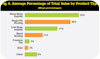
On average, nearly one-third of the roofing contractors’ total sales volume is derived from steep-slope asphalt products (Figure 6). Further, one-fourth of total sales involve single-ply roofing products. Roughly two-thirds of contractors surveyed sell steep-slope asphalt and single-ply roofing products.
In 2008, more roofing contractors have seen significant increases as opposed to decreases in their single-ply and metal roofing sales. Almost 40 percent of contractors sold more single ply over the past year, while 25 percent sold less. Thirty-five percent of respondents had increased sales from metal roofing, while 20 percent saw a decrease. Dramatic declines were seen in the sales of slate, concrete tile, and low-slope asphalt products in 2008.
More roofing contractors expect to see increases rather than decreases in their 2009 overall sales, with 43 percent expecting an increase, 30 percent expecting a decrease, and 27 percent expecting sales to remain the same. They also expect sales for single-ply roofing, metal roofing and steep-slope asphalt products to increase. Declining sales are expected to continue into 2009 for slate, concrete tile, and low-slope asphalt products.
 Inventory Levels and Manufacturers
Two in five roofing contractors carry inventory. Among those with inventory, a higher percentage of respondents indicated that their overall inventory levels were lower in 2008 than 2007 and they expect the levels to be even lower in 2009.
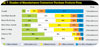
Roofing contractors tend to purchase their products from only a few manufacturers (Figure 7). Overall, contractors purchased material from an average of seven manufacturers, but when broken down by type of product, the average number of manufacturers used ranges from two to three across all products.
Most roofing contractors did not change the number of manufacturers they purchased from in 2008. Among those who did see changes, more indicate the number increased rather than decreased.
The majority of roofing contractors expect to see no difference in the number of manufacturers they will purchase from in 2009. Among those who do expect changes, more indicate the number would increase rather than decrease.
 In Their Own Words
In the midst of economic uncertainty, how do the contractors participating in our survey expect to weather the storm, build their businesses and even increase revenue? One way is by investing in employee training. Nearly all of the roofing contractors surveyed offer training opportunities to their employees, averaging 44 hours per person annually for training.
A surprisingly high number of respondents (332 out of 437) had some words of advice for their fellow contractors on running a successful business. Many stressed the importance of fiscal discipline and accurate estimating. “Know your costs,” was a common response, as was, “Do not lower prices to increase sales.”
“Cut expenses and watch every nickel,” counseled one contractor. Another said, “Charge enough to make money and be able to do the job right.”
Making sure bids were accurate and timely and reflected the most up-to-date material costs was a common theme. “Be careful with what you are bidding,” answered one contractor. “Find out how much the cost of roofing materials will be at the time the project is ready for a roof.” “Be careful,” cautioned another. “Check and recheck; make sure vendors will hold pricing till job starts.”
“Look at all your expenses carefully and find out where you can save money,” commented one contractor. “Examine the versatility of workers and office staff and see where you can match skills more effectively, so you can delegate more and spend more time on sales; spend more time on analysis of your marketing efforts and spend more money on specific target marketing; look for upgrades and add-ons that can provide more profit on jobs.”
Many survey respondents urged contractors to focus on key people, beginning with customers and employees. “Build relationships with customers, suppliers, employees, and even the competitors you respect,” said one contractor.
“Stay in human contact with your suppliers, insurers, bond people, etc., so that when times are especially tight they have a face to go with the business,” said another. “It goes a long way.”
Other contractors stressed the basics: quality workmanship and being fair and honest with the customer were the most common topics of responses in the survey.
“Treat every job as your own property,” said one respondent. “Don’t take shortcuts; callbacks will kill you.”
“Win with reputation and quality workmanship,” advised another contractor. “If a company lives by the price, they’ll die by price because their margins will be too tight.”
One contractor summed up the keys to success this way: “Be honest and thorough, guarantee your work, and always follow through on your guarantee. Rely on good word-of-mouth as your number one advertisement. Treat your help good; roofing is hard work and a happy employee will be more interested in making a water-tight product. Always use a distributor that is willing to work with you and is interested in making your work as stress-free as possible. Do your jobs to the best of your skills so that even on rainy nights you can sleep well. Always leave a clean jobsite. Learn from everyone, even your grunts - sometimes they can teach you.”
Another was more succinct. His advice? “Pray and work smart.”
The State of the Industry Study was conducted by Clear Seas Research, a division of BNP Media, which is also the parent company of Roofing Contractor magazine. For more information about this study or to find out more about Clear Seas Research services, please contact Sarah Turner at turners@clearseasresearch or visit www.clearseasresearch.com.
The fourth quarter of 2008 was a tumultuous time. A presidential election was taking place. Commodity prices were volatile. As the economy was in turmoil and bailouts and loans seemed the only ways to salvage the financial and automotive sectors of the economy, Roofing Contractor turned to contractors to take the pulse of the roofing industry in an exclusive survey sponsored by GAF Materials Corporation. Roofing Contractor magazine partnered with Clear Seas Research to conduct a research study to gauge roofing contractors’ sense of the commercial and residential roofing market. We also wanted to see how contractors expected the market to react over the next 12 months and the next three years.
Specific research objectives of the State of the Industry study included:
- Assessing the business conditions and employment levels in the roofing industry.
- Measuring sales volumes and directions across product categories.
- Evaluating current and expected inventory levels and manufacturer relationships.
The survey was conducted in October and November of 2008. Clear Seas Research contacted 18,627 contractors for the Web-based survey, and 437 contractors participated for a response rate of 2 percent.
Seventy-five percent of study participants have the title of owner, president, vice president or CEO, while another 20 percent were managers or supervisors. The contractors surveyed came from companies averaging 29 employees, but more than half of the respondents employ 10 or fewer workers. The average gross annual sales for 2008 among all survey participants was just under $5 million. Nearly three-fifths reported annual sales of at least $1 million.
One-fourth of study participants exclusively do residential work, while one-fifth only do commercial work. The remaining 56 percent do both residential and commercial work, the majority of it consisting of replacement or repair. Figure 1 lists the percentage of roofing contractors involved in each sector; 76 percent of respondents do residential replacement work, 68 percent do residential repairs, 63 percent do commercial replacement, and 62 percent do commercial repairs. On average, 59 percent of their total revenue comes from replacement work, while 21 percent comes from new construction and 19 percent from repairs (Figure 2).
Despite the slumping economy, more roofing contractors expected their total 2008 sales volume to increase from the 2007 level than expected it to decrease (Figure 3). Forty-five percent expected better sales in 2008 than 2007, while 39 percent expected sales to decline. Seventeen percent expected sales to remain the same.
Most are optimistic that sales volume will increase in 2009 and over the next three years. In 2009, 49 percent expect sales to increase, 30 percent expect them to decrease, and 21 percent expect them to stay the same (Figure 4). Three-quarters of contractors surveyed expect sales volumes to increase over the next three years, while 10 percent expect them to decrease and 14 percent believe they will stay the same (Figure 5).
Of those expecting increased revenue in 2009, the average projected increase is 21 percent. Those expecting decreased revenue in 2009 projected an average decrease of 22 percent; however, almost half of those expecting a decrease projected a decline of 6 percent to 15 percent.
Among those with residential roofing business, two out of five expect their 2008 residential roofing sales to increase compared to 2007. Notably more roofing contractors expect the residential sector to grow rather than decrease in 2009 (48 percent) and next three years (68 percent). Those predicting an increase in their 2009 residential roofing sales predict an average of a 19 percent gain, while those expecting a decrease project an average decline of 24 percent.
On the commercial side, a significantly higher percentage of roofing contractors expect their commercial roofing sales to increase from last year as well as in the future. Nearly one-half of respondents expect commercial sales to increase in 2009, while 61 percent expect them to increase in the next three years. Roofing contractors who expect to see an increase in their 2009 commercial roofing sales estimate an average increase of 17 percent, while those expecting a decrease project an average decline of 23 percent.
These relatively optimistic forecasts about their own companies come despite some negative expectations about employment levels and general business conditions.
Roofing contractors indicated that business conditions were generally worse in 2008 than 2007. Further, contractors anticipate business conditions to continue to worsen in 2009, with 43 percent expecting things to be worse this year while 27 percent expect them to be better.
Over nine in 10 roofing contractors indicated that the cost of doing business increased from 2007 to 2008. In 2009, three-quarters of respondents expect the cost of doing business to continue to climb. Roofing contractors who expect to see an increase in their 2009 cost of doing business estimate an average increase of 20 percent over 2008.
Half of respondents think industry employment levels dropped in 2008 from the previous year’s level and will continue to slide in 2009.
Sales by Product Type
On average, nearly one-third of the roofing contractors’ total sales volume is derived from steep-slope asphalt products (Figure 6). Further, one-fourth of total sales involve single-ply roofing products. Roughly two-thirds of contractors surveyed sell steep-slope asphalt and single-ply roofing products.
In 2008, more roofing contractors have seen significant increases as opposed to decreases in their single-ply and metal roofing sales. Almost 40 percent of contractors sold more single ply over the past year, while 25 percent sold less. Thirty-five percent of respondents had increased sales from metal roofing, while 20 percent saw a decrease. Dramatic declines were seen in the sales of slate, concrete tile, and low-slope asphalt products in 2008.
More roofing contractors expect to see increases rather than decreases in their 2009 overall sales, with 43 percent expecting an increase, 30 percent expecting a decrease, and 27 percent expecting sales to remain the same. They also expect sales for single-ply roofing, metal roofing and steep-slope asphalt products to increase. Declining sales are expected to continue into 2009 for slate, concrete tile, and low-slope asphalt products.
Two in five roofing contractors carry inventory. Among those with inventory, a higher percentage of respondents indicated that their overall inventory levels were lower in 2008 than 2007 and they expect the levels to be even lower in 2009.
Roofing contractors tend to purchase their products from only a few manufacturers (Figure 7). Overall, contractors purchased material from an average of seven manufacturers, but when broken down by type of product, the average number of manufacturers used ranges from two to three across all products.
Most roofing contractors did not change the number of manufacturers they purchased from in 2008. Among those who did see changes, more indicate the number increased rather than decreased.
The majority of roofing contractors expect to see no difference in the number of manufacturers they will purchase from in 2009. Among those who do expect changes, more indicate the number would increase rather than decrease.
In the midst of economic uncertainty, how do the contractors participating in our survey expect to weather the storm, build their businesses and even increase revenue? One way is by investing in employee training. Nearly all of the roofing contractors surveyed offer training opportunities to their employees, averaging 44 hours per person annually for training.
A surprisingly high number of respondents (332 out of 437) had some words of advice for their fellow contractors on running a successful business. Many stressed the importance of fiscal discipline and accurate estimating. “Know your costs,” was a common response, as was, “Do not lower prices to increase sales.”
“Cut expenses and watch every nickel,” counseled one contractor. Another said, “Charge enough to make money and be able to do the job right.”
Making sure bids were accurate and timely and reflected the most up-to-date material costs was a common theme. “Be careful with what you are bidding,” answered one contractor. “Find out how much the cost of roofing materials will be at the time the project is ready for a roof.” “Be careful,” cautioned another. “Check and recheck; make sure vendors will hold pricing till job starts.”
“Look at all your expenses carefully and find out where you can save money,” commented one contractor. “Examine the versatility of workers and office staff and see where you can match skills more effectively, so you can delegate more and spend more time on sales; spend more time on analysis of your marketing efforts and spend more money on specific target marketing; look for upgrades and add-ons that can provide more profit on jobs.”
Many survey respondents urged contractors to focus on key people, beginning with customers and employees. “Build relationships with customers, suppliers, employees, and even the competitors you respect,” said one contractor.
“Stay in human contact with your suppliers, insurers, bond people, etc., so that when times are especially tight they have a face to go with the business,” said another. “It goes a long way.”
Other contractors stressed the basics: quality workmanship and being fair and honest with the customer were the most common topics of responses in the survey.
“Treat every job as your own property,” said one respondent. “Don’t take shortcuts; callbacks will kill you.”
“Win with reputation and quality workmanship,” advised another contractor. “If a company lives by the price, they’ll die by price because their margins will be too tight.”
One contractor summed up the keys to success this way: “Be honest and thorough, guarantee your work, and always follow through on your guarantee. Rely on good word-of-mouth as your number one advertisement. Treat your help good; roofing is hard work and a happy employee will be more interested in making a water-tight product. Always use a distributor that is willing to work with you and is interested in making your work as stress-free as possible. Do your jobs to the best of your skills so that even on rainy nights you can sleep well. Always leave a clean jobsite. Learn from everyone, even your grunts - sometimes they can teach you.”
Another was more succinct. His advice? “Pray and work smart.”
The State of the Industry Study was conducted by Clear Seas Research, a division of BNP Media, which is also the parent company of Roofing Contractor magazine. For more information about this study or to find out more about Clear Seas Research services, please contact Sarah Turner at turners@clearseasresearch or visit www.clearseasresearch.com.
Looking for a reprint of this article?
From high-res PDFs to custom plaques, order your copy today!